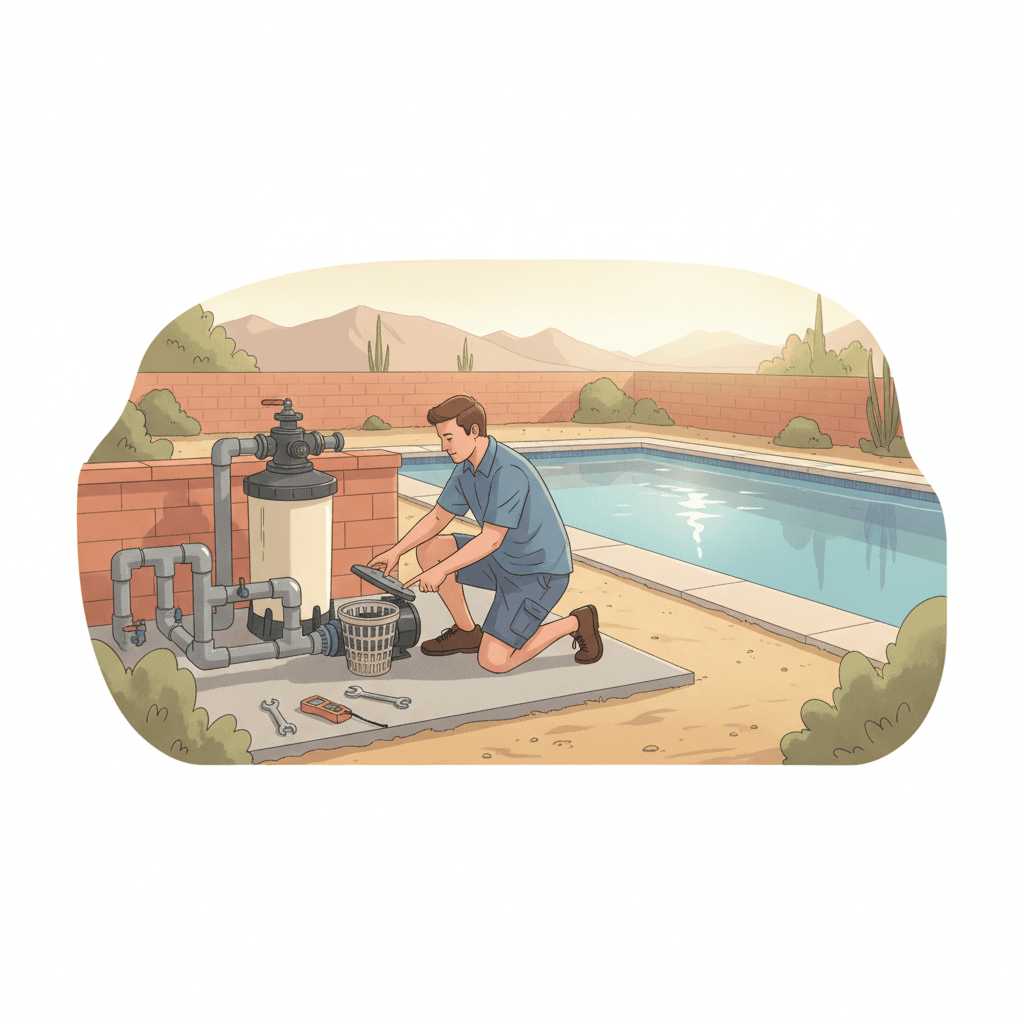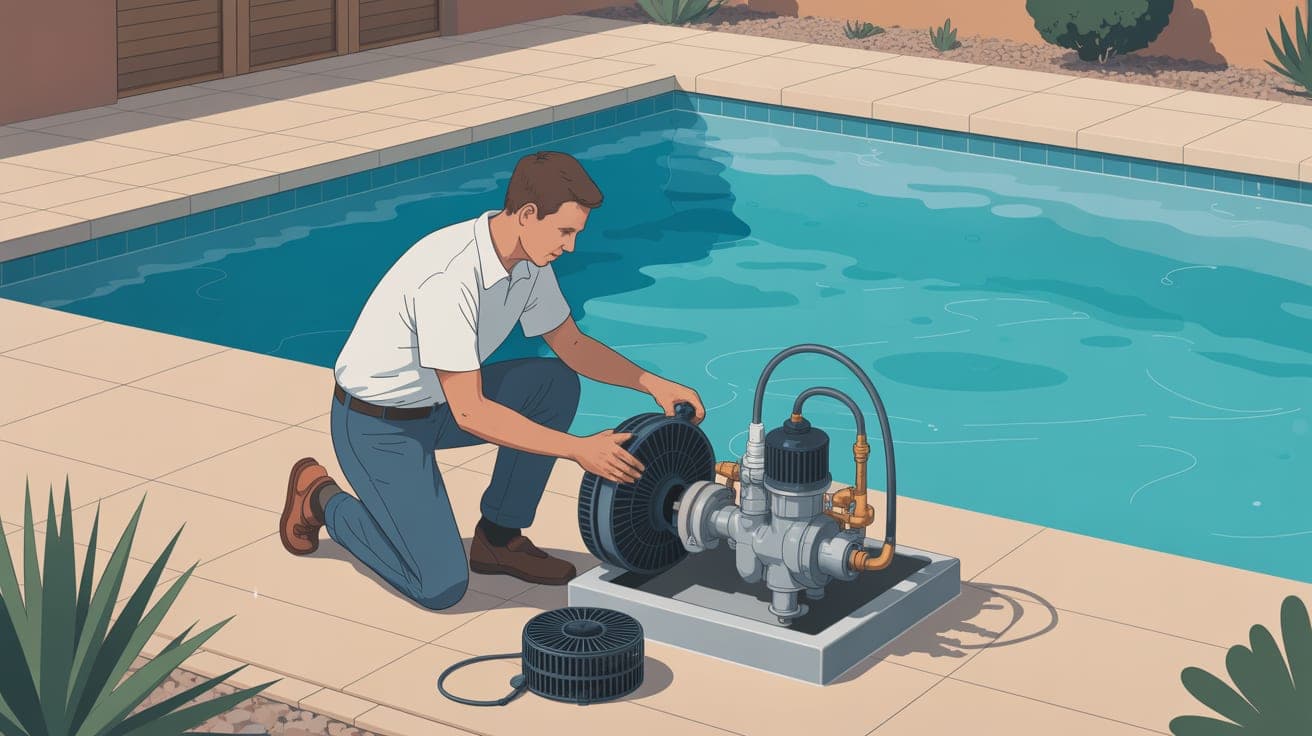
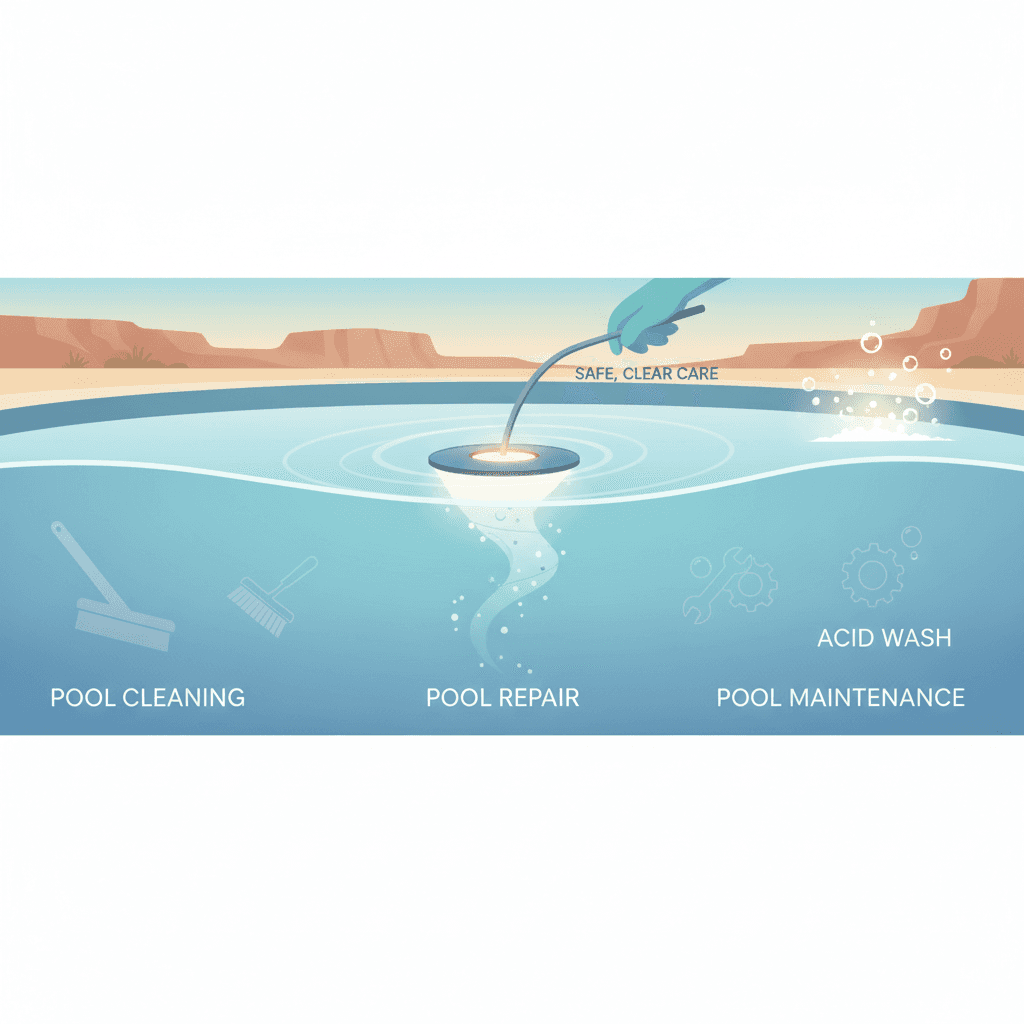
A pool drain cleaning service gives Mesa homeowners a clear response when water chemistry, staining, debris, or planned surface work exceeds routine care. Kinney Pools Inc evaluates drain safety, removes water responsibly, cleans the exposed vessel, and refills, balances, and restarts the system without pushing equipment you do not need.
Table of contents
- What does a Mesa pool drain cleaning service include?
- When is a pool drain cleaning service needed in Mesa?
- Should I choose weekly service, a partial drain, or a full drain and clean?
- How do Mesa homeowners choose a transparent drain-and-clean service?
- What should happen after a drain-and-clean service?
- Frequently asked questions
What does a Mesa pool drain cleaning service include?
A complete drain-and-clean appointment evaluates the pool first, safely removes all or part of the water, cleans the exposed surfaces, refills the pool, and returns the circulation system to normal operation. It is not simply putting a pump in the water and walking away.
For clarity, pool draining means intentionally lowering or removing pool water so the vessel can be cleaned, repaired, or diluted with fresh water. A main drain is the suction fitting at the bottom of the pool that helps move water to the pump; a drain-and-clean service does not automatically mean a clogged main drain line is being cleared. Those are different services and require different diagnosis.
A careful drain-and-clean appointment should include these steps:
- Water and condition assessment. The technician checks visible algae, staining, calcium scale, debris, water clarity, and chemistry. High cyanuric acid, calcium hardness, total dissolved solids, or persistent algae can make water replacement a reasonable recommendation. The goal is to identify the actual problem before deciding how much water to remove.
- Shell and site inspection. The pool surface, tile, fittings, skimmer, light niches, plumbing equipment, and surrounding drainage area need to be reviewed. This is where a professional identifies concerns that can make a full drain inappropriate, including groundwater pressure or a surface that needs more than standard cleaning.
- A drain plan. Some pools need only a partial exchange. Others need a full drain for surface cleaning, heavy contamination, or scheduled work. The provider should explain why the recommended water level is appropriate and where the discharged water can legally and safely go.
- Controlled water removal. Water is removed with the right pumping method and without running pool equipment dry. Arizona pools should never be treated as a one-size-fits-all project. An empty in-ground pool can be affected by hydrostatic pressure, which is upward pressure from water in the surrounding soil. In certain conditions, that pressure can damage or lift a pool shell.
- Surface cleaning. Once the waterline is lowered, the technician can remove settled debris, brush the walls and floor, clean the waterline, and address mineral buildup where appropriate. Cleaning methods should match the surface. Aggressive tools or harsh chemicals can damage plaster, pebble, tile, grout, and fittings.
- Refill, startup, and balancing. The pool is refilled to the proper level before the system is restarted. The pump is primed, circulation is checked, and water chemistry is balanced in stages. Fresh fill water changes calcium hardness, alkalinity, pH, and sanitizer demand, so balancing is part of the service, not an optional afterthought.
You can review examples of Mesa drain-and-clean pool work to see the type of condition a thorough cleaning addresses. If your pool needs scheduled water removal rather than an emergency cleanup, our dedicated pool draining service is the right starting point.
When is a pool drain cleaning service needed in Mesa?
Mesa homeowners need a pool drain cleaning service when normal brushing, filtration, and chemical adjustment cannot correct the water or surface condition, or when a repair or renovation requires a lower water level.
A green pool does not automatically need to be drained. Most algae blooms respond to proper circulation, brushing, sanitation, filtration, and removal of organic debris. Draining an algae-filled pool before diagnosing circulation and sanitizer problems can waste water and leave the root cause untouched. Read more about why Arizona pools turn green if you are deciding between recovery service and water replacement.
Draining becomes more appropriate in these situations:
- Chemistry has become difficult to control. Cyanuric acid, also called stabilizer, protects chlorine from sunlight but does not evaporate. It accumulates over time because it remains in the water. Excessive stabilizer can make normal chlorine levels less effective. Calcium and dissolved solids can also build up as water evaporates and minerals remain behind. Partial replacement dilutes these materials; chemical additions do not remove them.
- Heavy mineral scale or stubborn waterline deposits are present. East Valley fill water and evaporation can leave calcium deposits on tile, fixtures, and surfaces. A drained pool provides access for the correct cleaning method. Scale removal should be handled carefully because overly aggressive work can scar finishes.
- Debris or contamination is beyond routine cleanup. Major debris accumulation, severe neglect, or water affected by a repair project may require the pool to be emptied or substantially lowered for complete cleaning.
- Surface work or certain repairs require access. Structural repairs, tile repairs, light work, skimmer work, and some plumbing or finish projects can require lowering the water. The exact level depends on the repair—not a blanket recommendation to empty the entire pool.
- A finish treatment is genuinely indicated. An acid wash may brighten stained plaster by removing a very thin layer of the surface. It is not routine maintenance. Because it shortens the life of a plaster finish when repeated unnecessarily, it should follow a clear inspection. Learn what is involved in a professional pool acid wash before approving one.
A drain-and-clean service is a decision based on condition, not a fixed annual event. In Mesa’s heat, evaporation can make mineral concentration rise quickly, but the correct interval still depends on your fill water, sanitizing method, bather load, surface, and test results.
Should I choose weekly service, a partial drain, or a full drain and clean?
Weekly service, partial water replacement, and a full drain and clean solve different problems, so the right choice depends on whether the issue is routine debris, concentrated water chemistry, or accessible surface contamination.
| Service approach | Best fit | What it actually fixes | Main trade-off | What to ask before approving |
|---|---|---|---|---|
| Weekly cleaning and maintenance | Normal dust, leaves, light debris, balanced water needs | Removes debris, maintains sanitizer, brushes surfaces, and supports filtration | It cannot remove minerals, stabilizer, or dissolved solids already concentrated in the water | Are circulation, filter condition, and chemistry being tested consistently? |
| Partial drain and refill | Elevated stabilizer, calcium, or dissolved solids without a need to access the whole shell | Dilutes concentrated contaminants while retaining part of the existing water | May need more than one exchange if concentrations are very high | What test result supports the proposed percentage of water replacement? |
| Full drain and clean | Severe surface buildup, major debris, planned shell access, or chemistry that needs a complete reset | Gives direct access to walls and floor and fully replaces old water | Requires a safety review, responsible discharge plan, refill time, and careful startup | Why is a full drain safer or more effective than a partial exchange? |
| Acid wash after draining | Specific plaster staining that will not respond to ordinary cleaning | Removes a thin outer layer of plaster to reduce some stains | It is abrasive to the finish and should not be sold as routine cleaning | What type of stain is present, and why will standard cleaning not work? |
For most homeowners, dependable ongoing swimming pool cleaning services prevent the neglected conditions that lead to major cleanouts. Weekly service also gives you a regular opportunity to catch declining water balance, weak circulation, or filter problems before they become expensive.

How do Mesa homeowners choose a transparent drain-and-clean service?
Choose a pool drain cleaning provider that diagnoses the pool before quoting major work, gives you a defined scope, and separates necessary cleaning from optional equipment recommendations.
Start with the explanation. A reliable provider can tell you whether the problem is chemical concentration, algae, scale, debris, a stained finish, poor circulation, or equipment failure. Those conditions can look similar from the backyard, but they do not call for the same solution. For example, a pump that loses prime may have a suction-side air leak, a low water level, a blocked skimmer basket, or a worn pump seal. Replacing the pump without testing those possibilities is not good diagnosis.
Ask for a scope that states:
- Whether the service is a partial drain or full drain, and why.
- How the pool shell will be assessed before water removal.
- What cleaning is included for the floor, walls, tile line, skimmers, baskets, and visible debris.
- Whether stain treatment, calcium removal, or acid washing is included or separately recommended.
- How the provider will handle water discharge in line with applicable local requirements.
- Who supplies refill water and how startup chemicals, filter attention, and equipment checks are handled.
- Which equipment issue has been confirmed, if any, before replacement is proposed.
Transparent service protects you from two common mistakes: draining a pool that can be recovered with cleaning and chemistry, and replacing equipment that only needs adjustment, cleaning, or repair. A dirty filter can restrict flow. A blocked impeller can reduce circulation. A worn valve O-ring can create a leak. None of those conditions automatically requires a new pump, filter, or heater.
A written recommendation should distinguish an urgent safety or operational issue from a preventive improvement. If an existing pump is circulating properly, holding prime, and operating without a confirmed mechanical fault, a drain-and-clean visit is not a reason to replace it. If a technician finds a real equipment concern, you should receive a clear explanation of the failure, the repair option, and the replacement option. Homeowners who need that level of practical troubleshooting can also explore our Mesa pool repair service.
What should happen after a drain-and-clean service?
After a pool drain cleaning service, the pool should be refilled, circulated, balanced, and observed until the water is clear and the equipment is operating normally.
Fresh water is not instantly pool-ready. Its pH, alkalinity, calcium hardness, and sanitizer level must be brought into the appropriate operating range for your pool’s finish and equipment. The pump must have enough water to prime correctly, and the filter must operate long enough to capture any fine material disturbed during cleaning. You should also inspect the water level over the next several days, especially if the pool was drained for repair work.
Keep baskets clear and maintain normal circulation after the service. If the pool develops cloudy water, loses water unexpectedly, or has weak return flow, report it promptly. Those symptoms may point to a separate filtration, suction, or plumbing concern rather than a problem with the cleaned surface. This follow-up confirms normal operation as well as a clean appearance.
For a clear drain-and-clean recommendation, a defined scope of work, and no unnecessary equipment pressure, contact Kenney’s Pools Service and Repair to discuss your Mesa or East Valley residential pool. Kenneyspoolsserviceandrepair LLC — 616 S 97th Pl, Mesa, AZ 85208 — (480) 360-7149.
Frequently asked questions
Does every green pool need to be drained?
No. Most green pools can be recovered through debris removal, brushing, filtration, circulation correction, and proper sanitizer treatment. Draining is appropriate when testing or inspection shows concentrated chemistry, severe contamination, or another condition that routine recovery cannot resolve.
Is a pool drain cleaning service the same as unclogging a main drain?
No. A pool drain cleaning service removes or lowers pool water so the vessel can be cleaned or serviced. Unclogging a main drain involves diagnosing the suction line and drain fitting that carry water to the pump, which is a separate plumbing or circulation repair.
Can a Mesa pool be fully drained safely?
A Mesa pool can be fully drained safely only after the shell, surrounding conditions, groundwater risk, surface type, and discharge plan have been evaluated. Hydrostatic pressure from water in the soil can create risks for an empty in-ground pool, so full draining should never be treated as a casual maintenance task.
Will draining a pool remove high cyanuric acid and calcium?
Yes, replacing water lowers cyanuric acid, calcium hardness, and other dissolved materials because those substances are diluted by fresh fill water. The amount removed depends on whether the pool receives a partial exchange or a full drain and refill.
Should I approve an acid wash during every drain and clean?
No. An acid wash should be approved only for specific plaster staining or surface conditions that do not respond to normal cleaning. Acid removes a thin layer of plaster, so unnecessary or repeated acid washing can shorten the usable life of the finish.
What should a drain-and-clean estimate include?
A drain-and-clean estimate should identify the planned water level, cleaning steps, surface treatment if needed, discharge approach, refill responsibilities, chemical startup, and any separately approved repairs. It should also explain why equipment replacement is necessary if replacement is recommended.
- pool draining
- pool cleaning
- mesa pools
- pool maintenance
- water chemistry

Kenneyspoolsserviceandrepair
Licensed Pool Service Professionals · Mesa, AZ
Kenney's Pools Service and Repair has spent over a decade keeping residential pools across Mesa and the East Valley clean, balanced and running right. Locally owned, licensed, and focused exclusively on homeowners.