
Kenney’s Pools provides dependable pool maintenance services Mesa homeowners can rely on for weekly cleaning, water testing, chemical adjustment, equipment checks, and clear repair recommendations. In Mesa’s heat, wind, and hard-water conditions, dependable service protects safe water, steady circulation, and the equipment that keeps your pool usable.
Table of contents
- What should pool maintenance services Mesa homeowners expect each week?
- Why do pool maintenance services Mesa homeowners trust prevent costly repairs?
- What happens during a reliable weekly pool service visit?
- How should you compare residential pool maintenance providers?
- How much do pool maintenance services in Mesa cost?
- When should routine maintenance become a pool repair call?
- Frequently asked questions
What should pool maintenance services Mesa homeowners expect each week?
Pool maintenance services Mesa homeowners should expect each week include debris removal, brushing, vacuuming as needed, water testing and balancing, filter-system inspection, and a clear report of anything that needs attention.
A proper visit starts with the water and the circulation system, not just a quick skim. A technician should remove leaves and windblown debris from the surface, skimmer, pump basket, and cleaner area. Organic debris consumes sanitizer as it breaks down. Left in the pool, it also stains plaster, clogs baskets, and creates extra work for the filter.
Brushing is equally important. Brushing dislodges dirt, early algae growth, and biofilm, which is a thin, protective layer of microorganisms that can adhere to pool walls, steps, tile, and fittings. Sanitizer works far better when that layer is disrupted. Areas with limited water movement, such as steps, corners, beneath ladders, and along waterlines, deserve close attention.
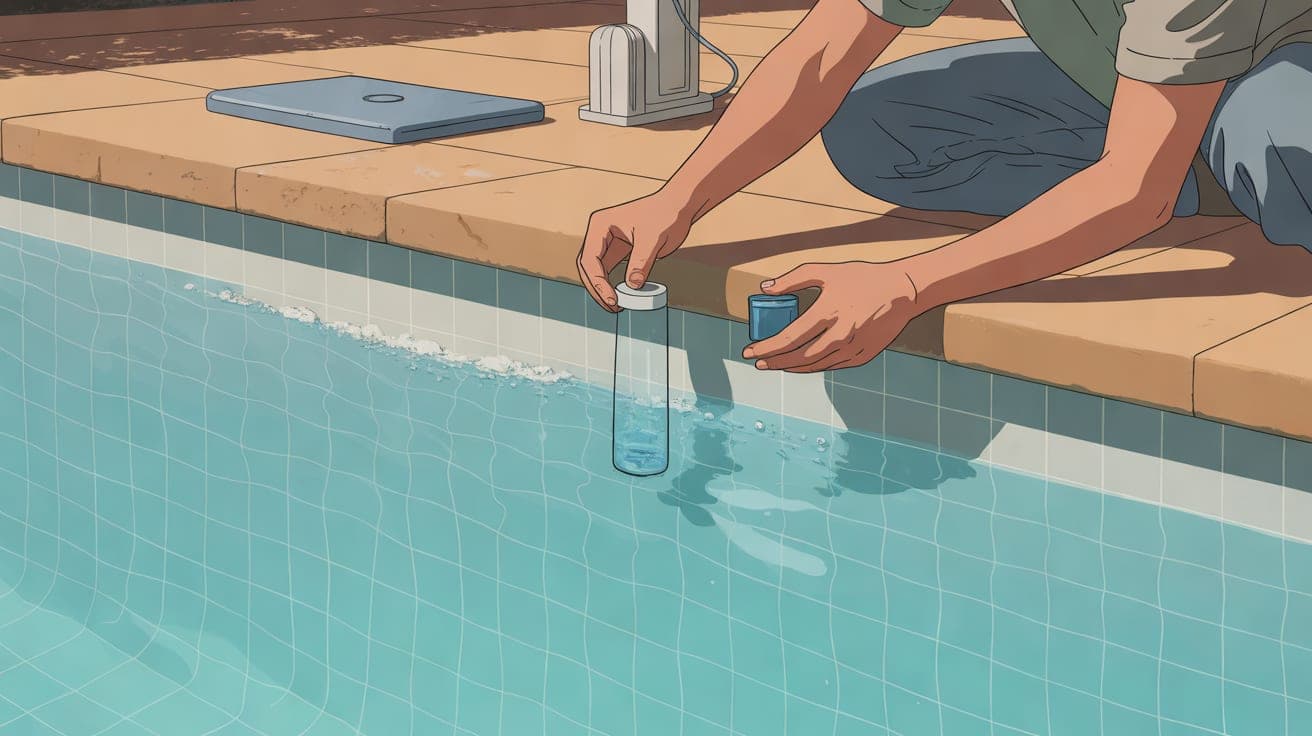
Your service should also include water testing. A dependable technician evaluates the readings together because one adjustment can affect another:
- Free chlorine is the active sanitizer available to kill contaminants in the water. It is not the same as total chlorine, which also includes chlorine that has already reacted with contaminants.
- pH measures how acidic or alkaline the water is. It affects swimmer comfort, sanitizer performance, and the likelihood of scale or corrosion.
- Total alkalinity acts as a buffer that helps prevent pH from swinging too quickly.
- Cyanuric acid helps protect chlorine from rapid sunlight loss, but excessive buildup can make chlorine less effective.
- Calcium hardness matters in Mesa because mineral-heavy water can contribute to scale on tile, heaters, plumbing, and salt-cell surfaces.
Chemical balancing is not a matter of adding products on a fixed schedule. The correct treatment depends on the pool’s test results, surface type, sanitizer system, bather use, weather, and recent water additions. Our pool chemical balancing service focuses on correcting the conditions that affect water quality rather than masking a problem for a few days.
A weekly visit should also include a visual equipment check. The technician should look for proper return flow, unusual pump noise, air in the pump basket, leaks at unions or valves, deteriorating seals, and warning signs at the filter. You should know what was serviced, what was added, and whether the pool needs a repair visit.
Why do pool maintenance services Mesa homeowners trust prevent costly repairs?
Pool maintenance services Mesa homeowners trust prevent costly repairs by keeping water chemistry, circulation, and filtration within the operating conditions the pool equipment needs.
Most pool damage develops gradually. A pump does not usually fail because of one hot afternoon. It fails after repeated loss of prime, restricted flow, air leaks, overheating, or operation against a dirty filter. A filter does not simply stop working; its flow declines as debris collects, which can reduce circulation and place extra strain on the pump.
Circulation means moving pool water through the skimmer and main drain, pump, filter, heater or other equipment, and return lines. The circulation system distributes sanitizer and captures debris. When circulation is weak, dead spots develop. Those areas are more likely to turn cloudy or support algae, even if the pool received chemicals.
Filter care is a practical example of why maintenance matters. A clean filter has a normal operating pressure and healthy water flow. As it loads with debris, pressure and flow behavior change. Cleaning too rarely restricts circulation. Cleaning some filter media too aggressively or too often can also reduce its ability to trap fine particles. The right approach is based on the filter type, the system’s normal clean condition, water clarity, and observed flow—not guesswork. Learn more about pool filter cleaning in Mesa if your water stays dull or return flow seems weak.
Mesa heat adds another pressure point. High temperatures increase evaporation and speed up sanitizer loss. Wind carries dust and organic debris into the water. Intense sun can quickly consume unprotected chlorine. Hard water can leave calcium scale inside equipment and on visible surfaces. Weekly attention catches these changes before they become an algae cleanup, a clogged filter, damaged seal, or water-quality problem.
Consistent maintenance also protects the pool finish. Scale, metal staining, persistent organic staining, and neglected algae are not all solved the same way. For example, an acid wash removes a very thin layer of surface material to address certain stains or scale. It is a corrective service, not routine cleaning, and it should only be recommended after identifying the surface condition. Our Mesa pool acid wash service can be discussed when ordinary brushing and water balancing will not correct the finish issue.
What happens during a reliable weekly pool service visit?
A reliable weekly pool service visit follows a repeatable inspection and care process, then communicates the pool’s condition and any next step you should consider.
A thorough visit generally follows this order:
- Inspect the pool and equipment. The technician checks water appearance, water level, surface debris, return movement, pump operation, visible leaks, and equipment-area conditions.
- Remove debris and empty baskets. Skimming, basket cleaning, and clearing debris protect flow and prevent organic material from breaking down in the system.
- Brush and vacuum where needed. Wall and step brushing disrupts biofilm and sediment. Vacuuming removes material that will not be captured effectively by surface skimming alone.
- Test and adjust the water. The technician measures the chemistry that controls sanitation, comfort, and scale risk, then makes measured corrections.
- Check filter and circulation performance. This includes observing pressure, flow, pump priming, air accumulation, and any signs that the filter or pump needs closer service.
- Document concerns. A dependable provider tells you about abnormal readings, stains, algae, failing components, or repair recommendations while the issue is still manageable.
The trade-off is simple: a quick appearance-only visit may cost less upfront, but it does not provide the equipment and chemistry oversight that prevents surprises. Weekly maintenance should leave your pool cleaner and should also give you a clear picture of how it is operating.

How should you compare residential pool maintenance providers?
You should compare residential pool maintenance providers by the scope they perform, the condition reporting they provide, their repair capability, and how clearly they explain exclusions and additional work.
Do not choose solely by a low monthly quote. Ask what the plan actually includes, whether chemicals are included or billed separately, how filter cleaning is handled, how repair concerns are reported, and whether you receive approval before non-routine work begins. For a homeowner, transparency matters as much as technical skill.
| Service approach | What is usually covered | Best fit | Questions you should ask | Main risk to watch for |
|---|---|---|---|---|
| Full weekly residential service | Cleaning, testing, balancing, basic equipment checks, and condition reporting | Homeowners who want consistent oversight | Are routine chemicals included? How are repairs approved? | Assuming major cleaning or filter service is automatically included |
| Chemical-only visit | Testing and chemistry adjustment, with limited physical cleaning | Pools with an owner who reliably skims and brushes | Who handles baskets, vacuuming, and equipment checks? | Debris, early algae, or flow problems being missed |
| Owner maintenance with periodic professional support | Homeowner handles routine care; professional handles inspections or issues | Experienced owners willing to test often and learn their system | What conditions require a service call? | Delaying help until water or equipment is already in poor condition |
| Low-detail weekly visit | A basic visit with vague or limited scope | Rarely the best long-term choice | What exact tasks happen every visit? What is documented? | Paying for a visit without receiving meaningful maintenance |
A qualified provider should be comfortable explaining the work in plain language. You should not have to guess why a chemical was added or why a part is being recommended. Reliable service also means showing up consistently, communicating promptly, and treating your property with care.
Kenney’s Pools serves residential pool owners with maintenance and repair support tailored to the East Valley. If an equipment concern appears during service, our Mesa pool repair team can diagnose the issue rather than leaving you to search for another contractor. Homeowners outside Mesa can also explore residential pool service in Queen Creek.
How much do pool maintenance services in Mesa cost?
Pool maintenance services in Mesa cost more or less based on the service scope, pool size and condition, chemistry needs, debris exposure, equipment complexity, and whether specialty work is required.
A meaningful estimate separates recurring service from corrective work. Weekly care may cover standard cleaning and water balancing, while filter deep cleaning, green-pool recovery, drain work, stain treatment, or equipment repair may be separate services. That distinction is fair when it is explained before work begins.
Be cautious with any price that does not state what is included. Two service plans can sound identical but differ substantially in chemical coverage, brushing frequency, vacuuming, filter attention, communication, and repair reporting. The best value is a plan that keeps the pool stable and makes costs understandable—not simply the lowest initial number.
Above-ground pools also need maintenance, although the equipment configuration, water volume, and access can differ from an in-ground pool. A provider should confirm the pool type, filtration system, sanitizer method, and condition before promising a scope of service. The fundamentals remain the same: clean debris, balanced water, adequate circulation, and a functioning filter.
When should routine maintenance become a pool repair call?
Routine maintenance should become a pool repair call when the technician finds a mechanical, electrical, plumbing, structural, or persistent water-quality problem that cleaning and normal balancing cannot correct.
Call for a repair assessment when you notice any of the following:
- The pump will not prime, loses prime repeatedly, makes grinding sounds, or trips power.
- Return jets have weak flow after baskets are emptied and routine filter attention is completed.
- Water leaks from the equipment pad, plumbing connections, pump, filter tank, or heater area.
- The filter has a cracked tank, damaged valve, recurring internal bypass, or cannot maintain clear water despite correct chemistry.
- The pool loses water beyond normal evaporation or shows wet areas around equipment.
- Water remains cloudy, green, foamy, or discolored after a proper diagnostic and corrective treatment.
- A light, automation control, timer, or other electrical component behaves unpredictably.
Maintenance identifies the symptoms; repair identifies and corrects the cause. For example, low return flow may come from a dirty filter, a clogged impeller, a suction-side air leak, a failing pump, a valve problem, or plumbing restriction. Replacing parts before diagnosing the flow path wastes money. A repair professional should inspect the system, explain the cause, and provide a clear recommendation before proceeding.
For dependable weekly care, straightforward reporting, and residential repair support in Mesa and the East Valley, contact Kenney’s Pools Service and Repair to discuss your pool’s condition and service needs. Kenney's Pools Service and Repair LLC — 616 S 97th Pl, Mesa, AZ 85208 — (480) 360-7149.
Frequently asked questions
What does weekly pool maintenance include in Mesa?
Weekly pool maintenance in Mesa should include surface debris removal, basket cleaning, brushing, water testing, chemical balancing, and a basic inspection of circulation and filter equipment. The exact vacuuming and treatment needed depends on the pool’s condition, recent weather, and debris load.
How often should a residential pool be professionally serviced in Mesa?
Most residential pools in Mesa benefit from weekly professional service because heat, sun, windblown debris, and evaporation can change water conditions quickly. Weekly visits make it easier to correct small chemistry or circulation issues before they become algae, staining, or equipment problems.
Are chemicals included with pool maintenance service?
Chemical inclusion depends on the service plan, so homeowners should ask whether standard balancing chemicals are included and how non-routine treatments are billed. A transparent provider explains what the recurring service covers before adding charges for specialty chemicals or corrective work.
Does regular pool maintenance prevent pump and filter repairs?
Regular pool maintenance reduces the likelihood of pump and filter damage by keeping baskets clear, preserving water flow, monitoring filter performance, and identifying leaks or air intrusion early. Maintenance cannot prevent every failure, but it helps catch the conditions that place unnecessary strain on equipment.
When should I call for pool repair instead of routine cleaning?
Call for pool repair when a problem involves equipment failure, a leak, electrical behavior, broken plumbing, persistent low flow, or water that does not clear after proper maintenance. Routine cleaning can address debris and normal chemistry changes, but it cannot repair a failing pump, cracked filter, or damaged valve.
- pool maintenance
- mesa pool service
- pool cleaning
- pool repair
- water chemistry

Kenney's Pools
Licensed Pool Service Professionals · Mesa, AZ
Kenney's Pools Service and Repair has spent over a decade keeping residential pools across Mesa and the East Valley clean, balanced and running right. Locally owned, licensed, and focused exclusively on homeowners.