
Pool Repair · Mesa & the East Valley
Something's Wrong.
Let's Find Out What.
Start with what your equipment is doing — the noise, the pressure, the water. You get the likely cause, whether it can wait, and what we'd check, before anyone mentions replacing anything.
- Diagnosis first
- Options explained
- Price before work
The Diagnostic Center
What is your pool doing?
Pick the closest one. You get a straight answer on the likely cause, whether you can keep running the pool, and what a technician would actually check — in that order.
My pump is loud, screeching or grinding
Book soonA screech or grind that has got worse over weeks is almost always motor bearings. A harsh rattle that came on suddenly is usually cavitation — the pump straining because it cannot get enough water.
Likely causes
- Motor bearings worn — the classic rising screech
- Cavitation from a starved suction side: blocked basket, low water, or air getting in
- Debris trapped in the impeller
- Motor mounts loose, so the whole unit resonates
What we'd check
- Whether the noise changes with the pump primed vs starved
- Basket and impeller for debris
- Shaft play at the motor
- Water level and suction-side seals
Can I keep running the pool?
Short term, yes — but bearing noise only goes one way. The cheap moment to act is while it is still just noise.
- Common repair
- Bearing or motor replacement, or clearing the impeller and fixing whatever was starving it.
- When replacement makes more sense
- The motor has already been rebuilt once, or a new motor approaches the price of a new pump.
My pump won't hold prime
Turn it offLoss of prime means air is getting into the suction side, or water is not reaching the pump. A pump that runs without water destroys its seal within minutes and can crack the housing.
Likely causes
- Lid o-ring perished, or the lid not seated properly
- Drain plugs or a union loose on the suction side
- Water level below the skimmer mouth, so it gulps air
- Blocked skimmer or pump basket
- A cracked pump lid
What we'd check
- Lid, o-ring and lid seating
- Every suction-side union and plug
- Water level against the skimmer
- Baskets, then the impeller
Can I keep running the pool?
No. This is the one symptom where switching the pump off until someone looks genuinely saves you money — dry running is what turns a cheap o-ring into a new pump.
- Common repair
- Replacing the o-ring or lid, resealing a union, or clearing the blockage that starved it.
- When replacement makes more sense
- The housing itself has cracked from running dry, or the seal has already failed more than once.
There's air in the pump basket
Book soonAir visible in the strainer pot means the suction side is drawing air in somewhere between the pool and the pump. It is the early stage of the problem that becomes loss of prime.
Likely causes
- Lid o-ring dry, flattened or dirty
- A union or valve on the suction side not sealing
- Water level low enough that the skimmer occasionally gulps
- A leak on the suction plumbing before the pump
What we'd check
- Where the bubbles appear first
- Lid o-ring condition and lubrication
- Suction-side unions, valves and plugs
- Skimmer weir and water level
Can I keep running the pool?
For a short while. A small bubble stream is a warning; a basket half full of air is on its way to losing prime.
- Common repair
- Reseal or replace the o-ring, tighten or rebuild the offending union or valve.
- When replacement makes more sense
- The leak is in buried suction plumbing rather than at the pad — then it becomes a plumbing repair, not a pump one.
The return flow is weak
Book soonWeak returns mean the water is not turning over. Nearly always it is a restriction somewhere in the loop rather than the pump having lost power.
Likely causes
- Filter loaded — the most common cause by a distance
- Baskets full at the skimmer or pump
- A valve part-closed after someone worked on the pad
- Impeller partially blocked
- Air in the system reducing effective flow
What we'd check
- Filter pressure against its clean baseline
- Both baskets
- Valve positions across the pad
- Impeller for debris
Can I keep running the pool?
Yes, but the pool stops turning over properly, which is how clear water goes cloudy and then green in an Arizona summer.
- Common repair
- Filter clean or media replacement, clearing baskets or the impeller, correcting valve positions.
- When replacement makes more sense
- The filter no longer holds a clean baseline after service, or the media is past recovering.
My filter pressure is high
Book soonBoth Pentair and Hayward point to the same rule: clean or backwash when the gauge sits roughly 10 psi above the pressure it read when the filter was last clean. High pressure is a restriction after the pump.
Likely causes
- Filter media loaded with dirt and Arizona dust
- Media at the end of its life and no longer cleaning up
- A partly closed valve on the return side
- Scale build-up inside the system from hard water
What we'd check
- Gauge reading vs the clean baseline
- Whether pressure recovers after a clean
- Return-side valve positions
- Media condition
Can I keep running the pool?
Briefly. Sustained high pressure makes the pump work harder than it should and strains the filter housing.
- Common repair
- Clean or backwash the filter; replace media that no longer recovers.
- When replacement makes more sense
- Pressure returns to high quickly after each clean — the media or the tank is done.
My filter pressure is low
Book soonLow pressure usually means the pump is not moving enough water in the first place — a restriction before the pump, rather than after it.
Likely causes
- Blocked skimmer or pump basket starving the pump
- Air being drawn in on the suction side
- Water level too low
- Impeller clogged
- The pump losing prime intermittently
What we'd check
- Baskets first
- Water level
- Suction-side seals and unions
- Impeller
- Whether the gauge is itself faulty
Can I keep running the pool?
Not for long — low pressure with a running pump often means it is running starved, which is hard on the seal.
- Common repair
- Clear the restriction, reseal the suction side, or clean the impeller.
- When replacement makes more sense
- The impeller or the pump has worn to the point it no longer produces flow when everything else is clear.
My pool is losing water
Keep an eye on itIn an Arizona summer, evaporation is the most likely answer and is entirely normal. A genuine leak usually shows itself at the equipment pad before anywhere else.
Likely causes
- Evaporation — heat, low humidity and wind all accelerate it here
- Splash-out and backwashing being under-counted
- A drip at a union, valve or the pump seal
- A leak in the plumbing between pool and pad
What we'd check
- Whether the loss rate is consistent with evaporation
- The pad, dry, for any damp
- Unions, valves and the pump seal
- Whether loss continues with the pump off
Can I keep running the pool?
Yes. Water loss on its own is not an equipment emergency — but wet ground at the pad is worth looking at sooner.
- Common repair
- Reseal or replace the leaking fitting, union or seal.
- When replacement makes more sense
- The leak is in a failed valve body or a section of degraded pipe, which gets replaced rather than patched.
There's water around the equipment
Book soonWater at the pad is almost always a seal or a fitting rather than the pool structure — and the pump shaft seal is the most common single source.
Likely causes
- Shaft seal failed — it drips directly onto the motor below
- A union not seated, or its o-ring perished
- A cracked valve body or fitting
- Filter clamp band or tank o-ring weeping
What we'd check
- Exactly where the water originates when running vs off
- Shaft seal area beneath the pump
- Every union and valve
- Filter band and tank o-ring
Can I keep running the pool?
Only if the water is not reaching the motor or any electrics. Water running into a motor is the point to shut it off.
- Common repair
- Shaft seal replacement, or resealing/replacing the offending union, valve or o-ring.
- When replacement makes more sense
- The motor has already been soaked, or the housing is cracked.
My pump won't start
Turn it offA pump that hums but does not turn, or does nothing at all, is an electrical or mechanical fault at the motor — not something to keep switching on to test.
Likely causes
- A failed start capacitor — the classic hum with no rotation
- The motor seized
- A tripped breaker or a failed timer upstream
- Thermal overload that has not reset
What we'd check
- Whether it hums, clicks or is silent
- Whether the shaft turns by hand once isolated
- Power reaching the motor
- Timer and breaker
Can I keep running the pool?
No. Repeatedly energising a motor that will not turn is how a repairable fault becomes a replacement.
- Common repair
- Capacitor replacement, or motor replacement where the motor itself has failed.
- When replacement makes more sense
- The motor is seized, or the cost of the motor approaches a new pump.
My equipment keeps shutting itself off
Turn it offRepeated shut-offs are usually a motor overheating and tripping its own thermal cutout. It is the motor telling you it is close to done.
Likely causes
- Motor overheating — often worse in the afternoon heat
- Poor ventilation or a sun-baked equipment pad
- A failing capacitor making the motor work harder
- Restricted flow forcing the motor to labour
What we'd check
- How long it runs before tripping
- Motor temperature and airflow around it
- Whether flow is restricted anywhere
- Capacitor and electrical supply
Can I keep running the pool?
No. Each thermal trip and restart is another hard cycle on a motor that is already struggling.
- Common repair
- Clearing the restriction, improving airflow, or replacing the capacitor.
- When replacement makes more sense
- The motor trips even with clear flow and good airflow — it has reached the end.
My pump is dripping water
Book soonA drip from underneath the pump, between the wet end and the motor, is the shaft seal. It is one of the most common pool repairs there is.
Likely causes
- Shaft seal worn or damaged — often after the pump has run dry
- Lid o-ring leaking from the top instead
- A cracked strainer pot
- Loose unions either side of the pump
What we'd check
- Whether the water comes from the lid, the unions or under the wet end
- Seal condition
- Housing for cracks
Can I keep running the pool?
Briefly, but the drip lands on the motor. Left running, a seal repair turns into a motor replacement.
- Common repair
- Shaft seal replacement — a routine repair when caught before the motor is affected.
- When replacement makes more sense
- The motor has already been soaked and damaged, or the housing is cracked.
I don't know what's wrong
Keep an eye on itYou do not need the right terminology. Describe what changed — a new noise, a different pressure reading, water where it should not be — and that is usually enough to narrow it down.
Likely causes
- Symptoms overlap: cloudy water can be flow, chemistry or filtration
- Something changed recently that is hard to pin down
- The pool has simply been neglected for a while
What we'd check
- What changed and when
- Pressure against the clean baseline
- Flow at the returns
- The whole loop, pad to pool
Can I keep running the pool?
If nothing is obviously leaking onto electrics and the pump is not screeching or dry, it can usually keep running until someone looks.
- Common repair
- Depends entirely on the diagnosis — which is exactly why we diagnose before quoting.
- When replacement makes more sense
- Only where the diagnosis genuinely supports it.
This is general guidance for common equipment behaviour, not a diagnosis. Pools differ, and the only way to know what has actually failed is to look at it.
Urgency, Honestly
Can this wait?
Three buckets. Most pool problems land in the middle one.
Turn it off
Running it is what causes the extra damage.
- My pump won't hold prime
- My pump won't start
- My equipment keeps shutting itself off
Book soon
Not an emergency — but it gets worse, and more expensive.
- My pump is loud, screeching or grinding
- There's air in the pump basket
- The return flow is weak
- My filter pressure is high
- My filter pressure is low
- There's water around the equipment
- My pump is dripping water
Keep an eye on it
Often normal. Worth watching before spending anything.
- My pool is losing water
- I don't know what's wrong
Know Your Equipment Pad
Follow the water
Every pool runs the same loop. Knowing which stage you are looking at is most of diagnosing it — and it explains why the symptom and the cause are so often at opposite ends.
Skimmer & drain
Where water leaves the pool and starts its trip to the pad.
What you notice when it goes wrong
- Air in the pump basket
- Weak suction
- Debris getting past
Usually fails because: A full basket, a stuck weir, or a low water level letting it gulp air.
Pump & motor
The heart of the system — it moves every gallon through everything else.
What you notice when it goes wrong
- Screeching or grinding
- Won't prime
- Dripping underneath
- Won't start
Usually fails because: Bearings, the shaft seal, the impeller, or the capacitor. In that rough order of frequency.
Pump installationFilter
Removes what circulation alone cannot. Its gauge is the best diagnostic on the pad.
What you notice when it goes wrong
- Pressure ~10 psi over clean
- Weak returns
- Water not clearing
Usually fails because: Loaded media, media past its life, or a weeping tank o-ring and clamp band.
Filter installationValves & plumbing
Directs the water and lets the system be isolated for service.
What you notice when it goes wrong
- Drips at the pad
- Unexpected flow changes
- Air being drawn in
Usually fails because: Cracked valve bodies, perished union o-rings, and pipe degraded by years of Arizona sun.
Returns
Puts filtered water back, and how you judge whether the loop is working.
What you notice when it goes wrong
- Weak or uneven flow
- Bubbles at the returns
Usually fails because: Rarely the returns themselves — weak flow here is a symptom of something upstream.
The Repairs We Actually Do
Where pool repairs really land
Most pool repair is pump repair, and most of the rest is water going where it shouldn't.
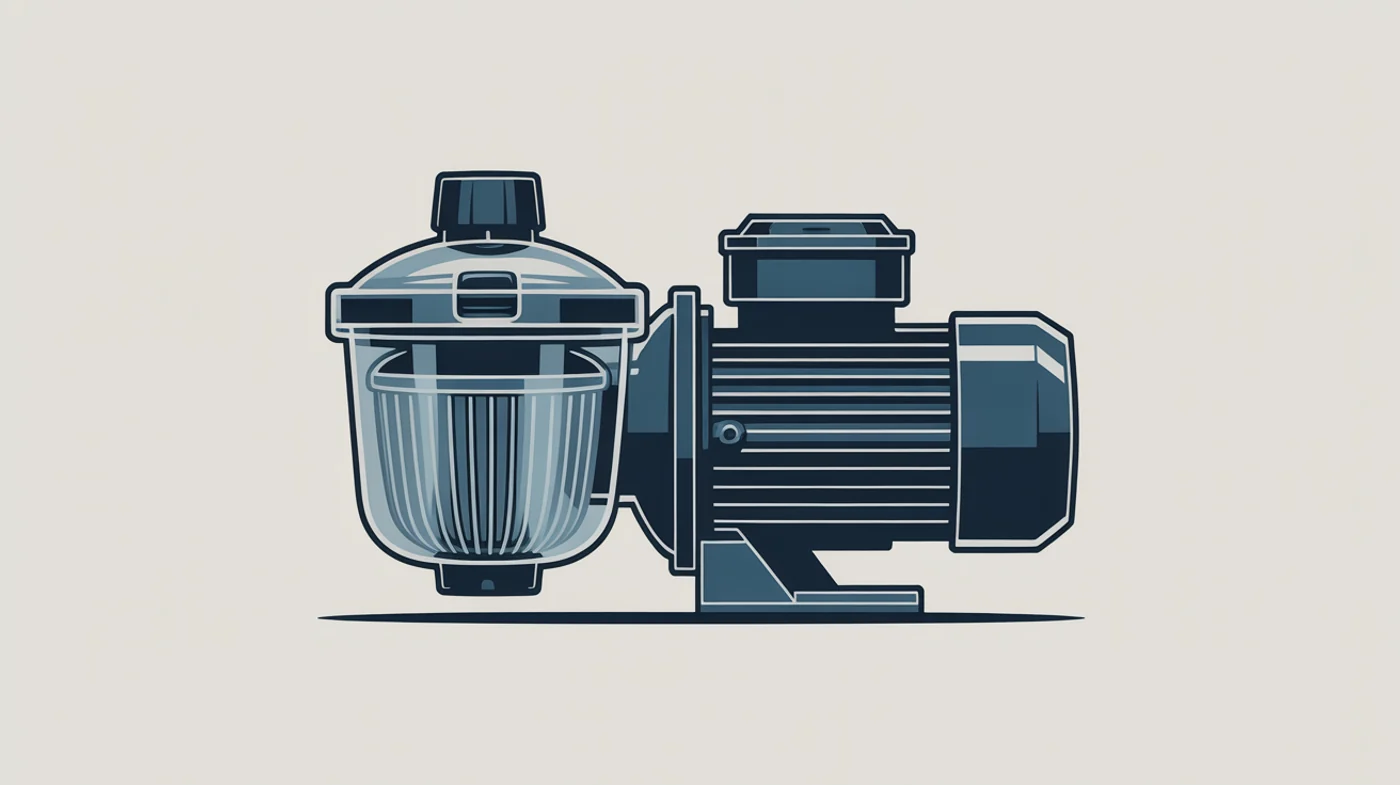
Pump & motor repair
The pump moves every gallon through everything else, so when it struggles the whole pool follows. Five parts account for nearly all of it — and four of the five are a repair, not a replacement, if they are caught early.
- Shaft seal— The most common pump leak. Drips onto the motor, which is what turns it into a bigger job.
- Bearings— The rising screech. Cheap while it is still noise.
- Impeller— Debris or wear — shows up as weak flow rather than sound.
- Capacitor— The hum with no rotation. Often the whole fix.
- Lid & o-ring— Perished seals draw air in, which is where prime loss starts.
Filter & pressure problems
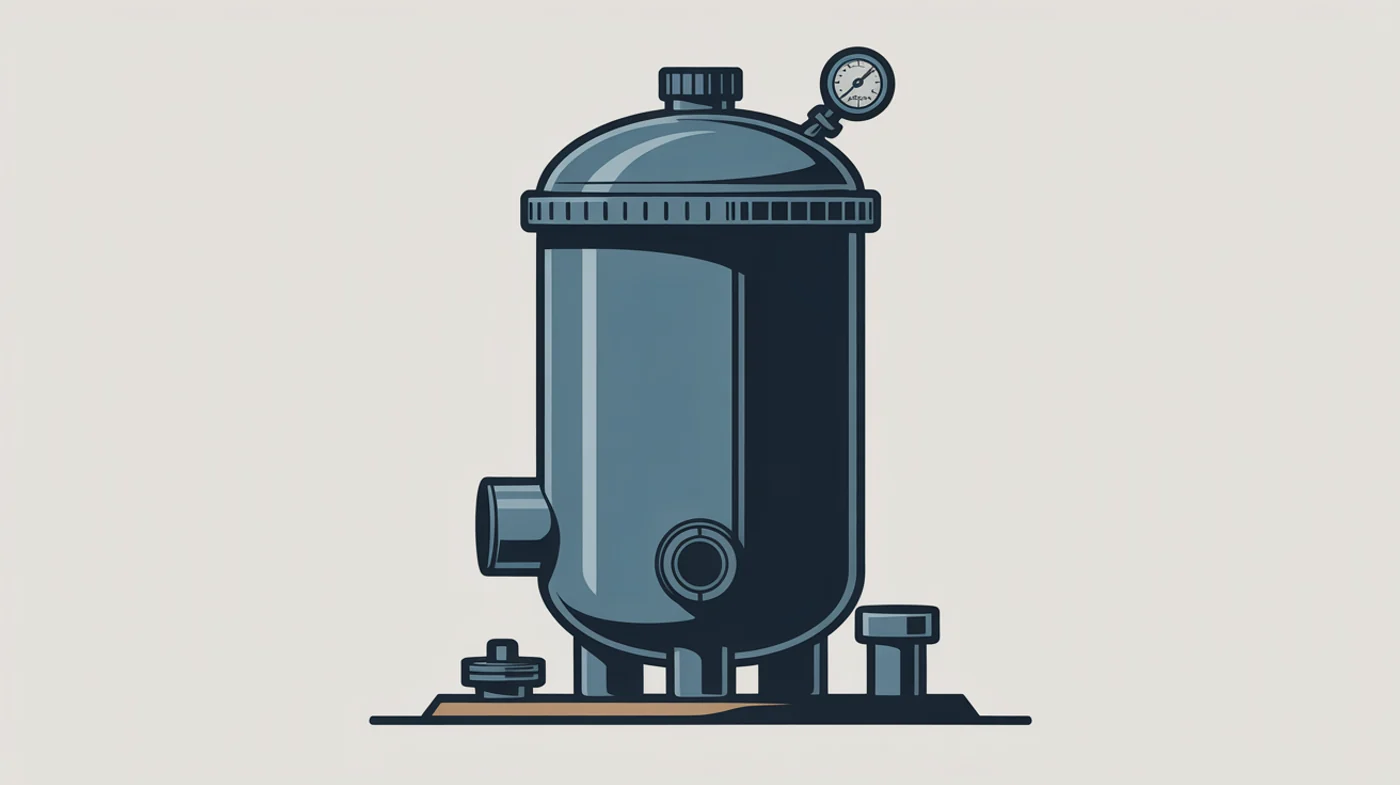
Read the gauge against the pressure it showed when the filter was last clean. Both Pentair and Hayward point to the same threshold: about 10 psi over that baseline means clean it. Everything else the gauge tells you is a variation on that.
- Pressure high
- A restriction after the pump. Loaded media, spent media, or a return-side valve part-closed.
- Pressure low
- A restriction before it. Blocked baskets, air being drawn in, low water, or a clogged impeller.
Leaks & water loss
In an Arizona summer, evaporation and a leak look identical from the deck. The job is separating them before anyone starts digging.
Get this checked- 1
Rule out evaporation first
Heat, low humidity and wind move a lot of water here. Loss alone proves nothing.
- 2
Check the pad dry
Damp ground, a weeping union or a dripping seal shows up before anything else does.
- 3
Pump running vs off
Whether the loss changes with the pump running narrows it to pressure or suction side.
- 4
Then the plumbing
Only once the pad is cleared does it make sense to look further out.
The Question Everyone Actually Has
Does it need replacing? Not necessarily.
The fear is being sold a new pump for a failed o-ring. Age alone decides nothing — these five things do, and a real diagnosis is what settles them.
| What we weigh | Repair may make sense | Replacement may make more sense |
|---|---|---|
| What failed? | A seal, o-ring, lid, basket, capacitor or union | The motor itself, or a cracked housing |
| Has it failed before? | First failure on this unit | Already rebuilt, or failing repeatedly |
| Are parts available? | Parts in stock and sensibly priced | Obsolete unit, parts hard to source |
| How do the numbers compare? | Repair is a fraction of replacement | Repair approaches the cost of new |
| How does it run? | Reasonably efficient already | Old single-speed running long summer hours |
No table decides this from a distance. What actually failed on your pump is what decides it — which is the whole reason we diagnose before quoting.
Get an honest diagnosis
Local Reality
Arizona is hard on pool equipment
Equipment here does not fail the way it does elsewhere. Six conditions shorten its life, and they explain most of what we get called out to.
Pad heat
Equipment sits in full sun on concrete through 110°F afternoons. Motors run hotter, and a motor that is already struggling trips its thermal cutout sooner.
Hard water & scale
Mesa water is classed as very hard, around 12–13 grains per gallon. Scale builds inside plumbing, on heat-exchange surfaces and on salt cells, quietly restricting flow.
Monsoon dust
Arizona’s monsoon runs June 15 to September 30. A single dust storm can load a filter enough to send pressure past its clean baseline in one afternoon.
Long filtration season
There is no winter shutdown here. Pumps run more hours per year than in most of the country, so wear arrives sooner in calendar terms.
UV on everything
Around 330 sunny days a year degrades exposed PVC, o-rings and pump lids. Brittle plastic at the pad is an Arizona failure mode.
Evaporation
Relentless evaporation drops water levels fast. A skimmer left gulping air is one of the most common causes of a pump losing prime here.
Monsoon dates per the National Weather Service; water hardness per USGS and the City of Mesa.
How A Diagnosis Goes
Eight steps, in this order
Nothing gets replaced before step five, and nothing gets charged before step six.
Listen
What is the equipment actually doing, and when did it change?
Isolate
Which part of the loop is responsible — suction side, pump, filter or return.
Test
Flow, pressure against the clean baseline, prime, and the condition of the equipment.
Explain
You get shown what failed, in plain terms, not handed a part number.
Options
Repair or replacement where both are genuinely viable — with the reasoning.
Price
The cost before any work starts. If something unexpected turns up, you decide.
Repair
The approved work, done properly, plumbed so the next service is not a demolition.
Verify
Prime, flow and pressure confirmed back to normal before we leave.
Straight About Scope
What we repair
Pumps and motors
Noisy, seized, leaking or non-priming — diagnosed, then repaired or replaced.
Leaks
Traced to their source rather than guessed at — plumbing, fitting, valve or seal.
Valves and plumbing
Cracked or leaking valves replaced, damaged pipe repaired or re-plumbed.
Filter systems
Tanks, internals and media — repaired where sound, replaced where they are not.
Circulation problems
Low flow, high pressure and poor turnover traced back to the real cause.
Equipment installation
New pumps, filters and full pads installed and commissioned properly.
What we don't
Heaters, pool lights, automation systems and electrical work sit outside what we take on. Plenty of companies list everything; we would rather tell you up front and point you somewhere appropriate than learn halfway through that it is not our trade.
Answers
Pool repair questions, answered
The symptoms Mesa pool owners search for most — answered straight.
Why is my pool pump making a loud noise?
A rising screech or grinding is most often motor bearings wearing out. The other common cause is cavitation — the pump straining because it is not getting enough water, usually from a blocked basket, a low water level or air being drawn in on the suction side. Noise is the earliest and cheapest warning you get: a bearing caught early is a repair, ignored it takes the motor with it.
Why won’t my pool pump prime?
Almost always air getting in on the suction side — a perished lid o-ring, a lid not seated, loose drain plugs, or a union that has worked loose. It can also be a water level below the skimmer mouth, or a blocked skimmer or pump basket. This is the one symptom where turning the pump off until someone looks genuinely saves money, because a pump running dry destroys the seal and then the housing.
Is my pool losing water, or is it just evaporation?
In an Arizona summer the two look identical, and evaporation is the more common answer. What separates them is where the loss is happening and whether anything at the equipment pad is wet. We start at the pad, because that is where the findable leaks usually are, before assuming anything about the shell or the plumbing.
Should I repair or replace my pool pump?
It depends on what actually failed, not on the pump’s age. A seal, o-ring, lid, basket or capacitor is normally worth repairing. A failed motor, a cracked housing, a unit already rebuilt once, or one where parts have become hard to source usually is not. We tell you which one you are looking at — including when a repair only buys you a few months.
What does the filter pressure gauge tell me?
It is the best early-warning instrument on the pad. Read against the pressure when the filter was last clean, a rise of roughly 10 psi is the manufacturer signal (both Pentair and Hayward say so) that it needs cleaning. Pressure that stays high after a clean, or keeps climbing quickly, is pointing at something else.
Do you repair pool heaters, lights or automation?
No. We handle pumps and motors, leaks, valves and plumbing, filter systems, circulation problems and equipment installation. Heaters, pool lights, automation and electrical work sit outside what we take on — we would rather say so up front than find out halfway through a job that it is not our trade.
Do you diagnose before quoting a replacement?
Always. The point of a diagnosis is to find out whether you need a part or a pump, and those are very different numbers. You get told what failed and what it will cost before any work starts, and if something unexpected turns up, you decide.
Can a repair wait, or should I switch the pump off?
Two symptoms are worth acting on immediately: a pump that will not hold prime, and one that keeps shutting itself off. Both mean the equipment is damaging itself by continuing to run. Noise, a slow drip or climbing pressure are worth booking soon but are not usually an emergency.
Where We Work
Repairs across the East Valley
Next Steps
Where repair leads
- Pump InstallationWhen the pump is genuinely past repairing
- Filter InstallationWhen media no longer recovers after a clean
- Equipment InstallationWhen more than one component is failing at once
- Pool MaintenanceWeekly care that catches these faults early
- Pool CleaningWhen the problem is debris, not equipment
Schedule pool repair in Mesa
Tell us what it's doing. We diagnose before quoting, price before working, and say so when a repair isn't worth it.