
Acid Wash · Mesa & the East Valley
It Takes A Layer
Of Your Pool.
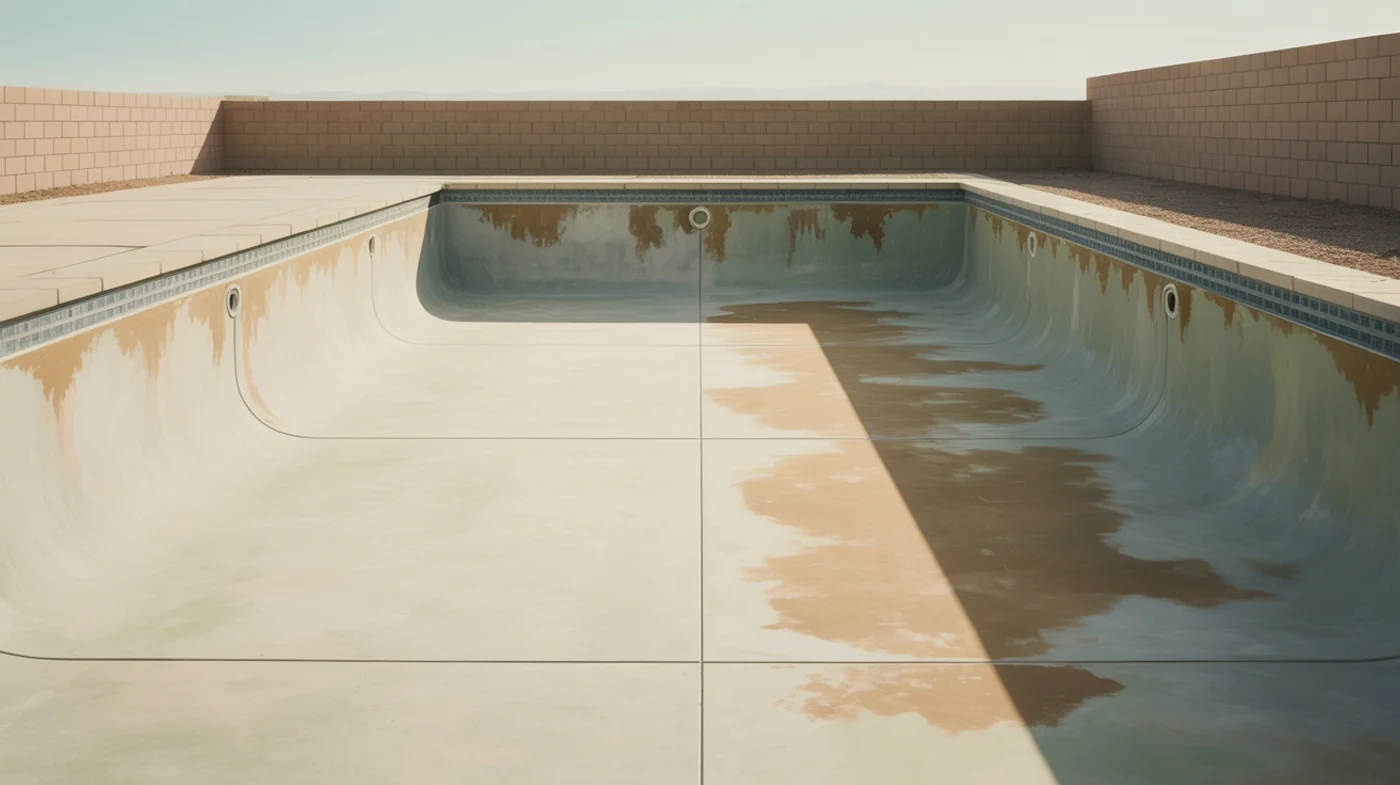
An acid wash is not a deep clean — it removes a thin layer of plaster to expose fresh surface underneath. It works brilliantly on the right stain and it spends something you cannot get back. So the first question is whether you need one at all.
- Stain identified first
- Cheaper options tried
- Told when it will not help
A pool acid wash is the controlled removal of a thin layer of plaster from a drained pool, using an acid solution worked evenly across the surface to expose cleaner material underneath. It is the right answer for embedded general staining that chemical treatment cannot reach — and the wrong answer for metal stains, waterline calcium and plaster that is already etched.
Be Clear About It
An acid wash is not a deep clean
It removes a thin layer of the plaster. An acid solution is worked across the drained surface, taking the top of the finish with it and exposing cleaner material underneath. That is why it works on staining nothing else touches — and why it is not something to do casually.
Your plaster has a finite thickness. Every acid wash spends some of it. A pool can take a number of them across its life, and nobody can tell you how many yours has left without knowing the original thickness and what has already been done to it.
Which is why the first question is always whether the pool needs one at all. Plenty of staining lifts with treatment, and plenty of what people call staining is deposit sitting on top of the surface rather than embedded in it.
Identify It First
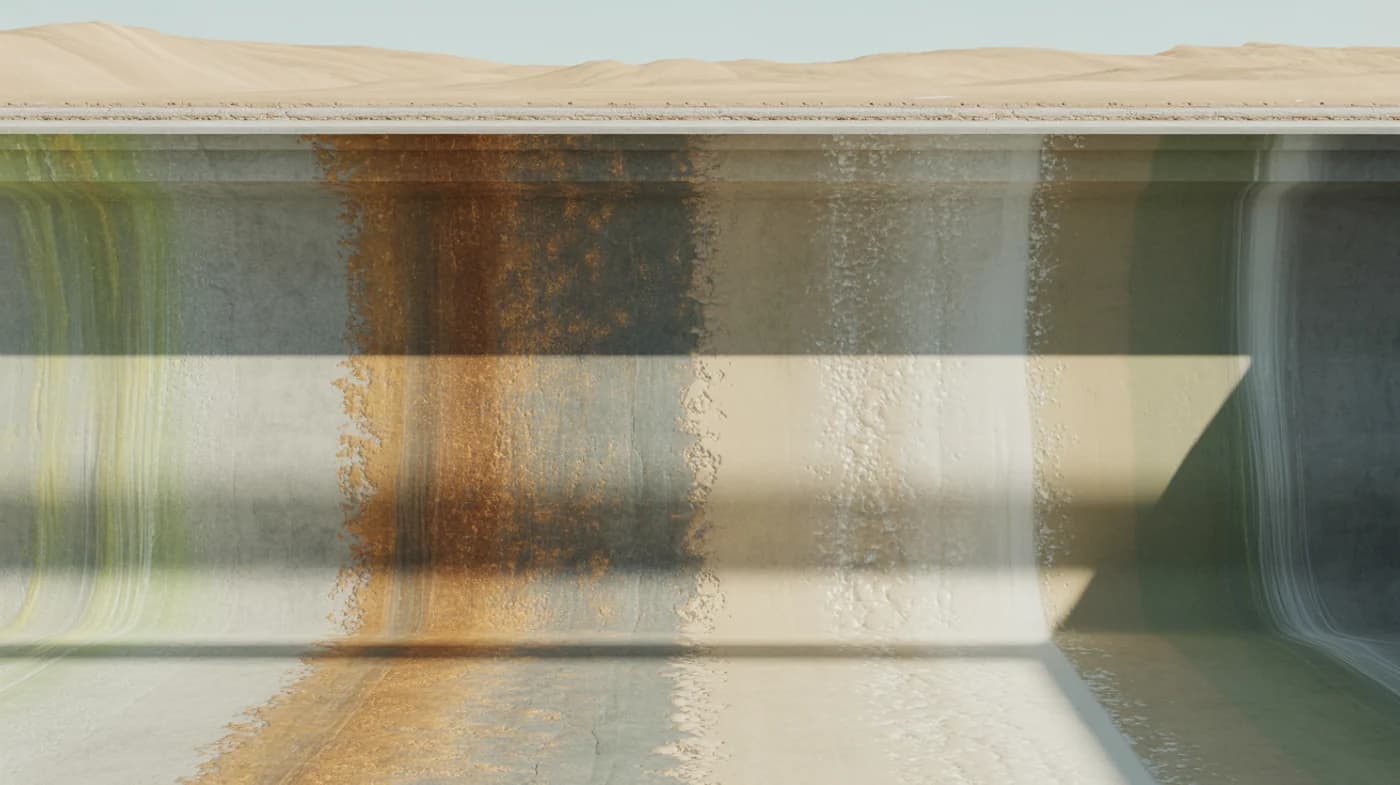
What kind of stain is it?
This is the whole decision. Get it wrong on a metal stain and acid sets the mark permanently.
Green or brown shadow
Try treatment first- Looks like
- A soft-edged discolouration, often where leaves or algae sat. Follows the shape of whatever was resting there.
- Usually
- Organic staining from algae or debris left in contact with the plaster.
Try treatment first. Organic staining often responds to chlorine and brushing, and if it does you have saved a layer of plaster. If it has genuinely embedded into the finish, an acid wash is what reaches it.
Treat it before removing surfaceRust, brown or blue-green patches
Not an acid wash job- Looks like
- Sharper-edged marks, sometimes with a rusty or inky quality. Can appear near fittings or spread from a point.
- Usually
- Metals in the water — from fill water, corroding fittings, or something dropped in and left.
This is the one to be careful with. Acid can set a metal stain rather than remove it, so it needs identifying and treating as a metal stain first. Reaching for acid here is how a mark becomes permanent.
Chalky white crust
Not an acid wash job- Looks like
- A rough, raised deposit — usually a band at the waterline, sometimes patches on the surface. You can feel it.
- Usually
- Calcium that has come out of the water and hardened onto the surface.
Not an acid wash job. This is deposit sitting ON the surface, not staining in it, and it is removed mechanically — which does not require emptying the pool. Fixing the water chemistry is what stops it coming back.
Why the calcium got thereOverall dull and dingy
Acid wash suits this- Looks like
- No distinct marks — the whole surface has just lost its brightness and looks tired.
- Usually
- Years of accumulated minor staining and surface wear.
This is the classic acid wash case. Nothing localised to treat, and the surface genuinely does come back brighter because you are exposing fresh plaster.
Rough, chalky underfoot
Not an acid wash job- Looks like
- The surface feels abrasive rather than smooth. Often pale and slightly powdery.
- Usually
- Etching — aggressive water has already dissolved calcium out of the plaster.
An acid wash removes more of a surface that has already lost material. If the plaster is etched, the honest conversation is about resurfacing rather than acid washing, and about fixing the water that caused it.
The water chemistry behind itAggregate showing through
Not an acid wash job- Looks like
- Pebbles or rough patches visible where the smooth finish has worn away entirely.
- Usually
- Plaster at the end of its service life.
Past the point an acid wash helps. Removing more surface from plaster that has already worn through does not restore it. This is a resurfacing conversation, and it is not work we take on — we will tell you that rather than sell you a wash that will not fix it.
General guidance, not a diagnosis. Stains that look identical in a photograph can have different causes, which is exactly why the first step of the job is someone looking at it.
A Different Job Entirely
The white line on your tile is not an acid wash
Waterline calcium is deposit sitting on top of the surface, not staining within it. It comes off mechanically, and doing it does not require emptying your pool.
These two jobs get bundled together constantly, and it matters because one of them spends a layer of your plaster and the other does not. If the white band is your only complaint, you probably do not need an acid wash at all.
Why the calcium got there in the first place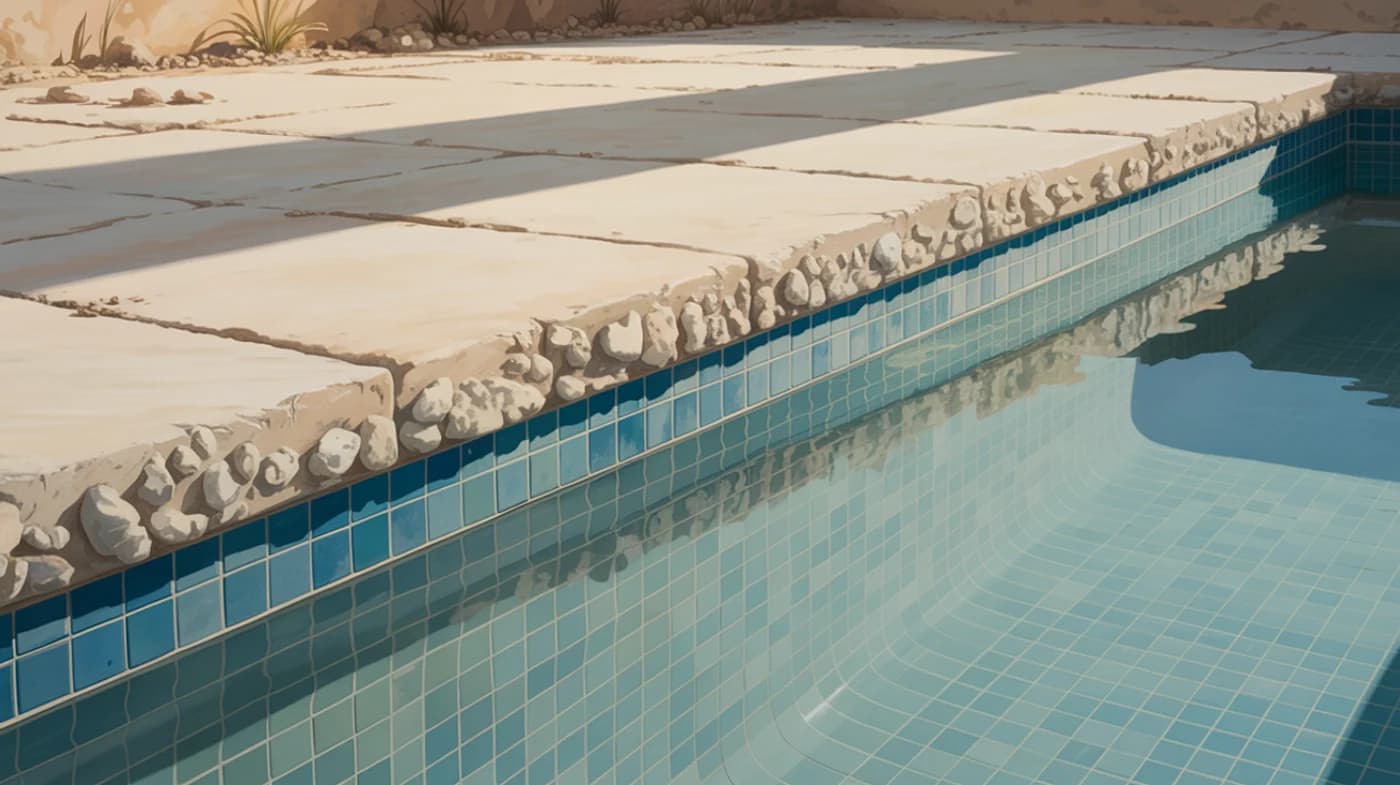
Four Options, In Order Of Cost
An acid wash is how you postpone a replaster
Worth knowing where it sits, including the step past it that we do not take on.
Chemical treatment
Targeted stain treatment with the pool still full.
When
Organic and many metal stains, caught before they embed.
Cheapest, least invasive, no surface removed.
Chemical balancingTile and deposit removal
Mechanical removal of calcium deposit from waterline tile.
When
The white crust at the waterline. A different job from acid washing the plaster.
Does not require emptying the pool.
Acid washyou are here
Controlled removal of a thin layer of plaster across the whole surface.
When
Embedded general staining that treatment cannot reach, on plaster with life left in it.
Requires a full drain, and spends some of the finish.
Resurfacing or replaster
A new finish applied over the old one.
When
Plaster that is etched through, has aggregate showing, or has had all the acid washes it can take.
The major intervention, and the one an acid wash is meant to postpone.
Not a service we offer. If this is where your pool is, we will say so.
City of Mesa guidance, checked 7 August 2026
Acid wash water is not pool water
This catches people out at the end of the job rather than the start. Mesa states it directly: because discharges from pool repairs can carry solid particles and high concentrations of chemicals, wastewater from those activities is not allowed into the storm sewer system OR the sanitary sewer system.
So an acid wash has two separate disposal questions — the pool water that comes out first, and the wash water afterwards — and they do not have the same answer. Planning that is part of the job rather than something to work out once the pool is empty.
Where the pool water itself can goHow The Job Runs
Ten steps, and the second one might end it
If treatment will lift the stain with the pool full, that is what we recommend. It saves you a drain and saves your plaster.
Look at it first
In person. Stain type decides everything, and getting it wrong is how a metal mark becomes permanent.
Try the cheaper thing
If treatment will lift it with the pool full, that is what we recommend — it saves you a drain and saves the plaster.
Assess the plaster
Whether the surface has the thickness to give up a layer. If it does not, we will say so.
Plan the water
Where it goes, under the rules that apply at your address — and separately, where the wash water goes, because that is not the same question.
Controlled drain
Timed so the surface is not sitting exposed any longer than the work needs.
The wash itself
Worked evenly across the surface. Evenness is the whole craft — a patchy acid wash looks worse than the staining did.
Neutralise
Residue fully neutralised before anything else happens. This is not an optional step and it is where corners get cut.
Refill promptly
Fresh plaster surface exposed to sun is on a clock. The refill is planned before the drain starts.
Startup chemistry
A freshly washed surface is at its most vulnerable. Aggressive water on new plaster does damage from day one.
Verify
Retested once circulated, so the water protecting the new surface is actually where it should be.
The Unglamorous Answer
Every surface problem starts as a water problem
Which is why some pools never need this work at all, and others need it repeatedly.
Do not let debris sit
Most organic staining is leaves and algae left in contact with the plaster long enough to mark it. Removing them is dramatically cheaper than removing the stain.
Pool cleaningKeep the water balanced
Aggressive water etches plaster and saturated water deposits calcium on it. Both of the surface problems that lead here are water problems first.
Chemical balancingDeal with green water properly
Algae that is cleared quickly leaves nothing behind. Algae that sits for weeks stains the finish, and that staining is what ends up needing surface removal.
Pool cleaningDilute before it saturates
Calcium that has nowhere to go ends up on your surfaces. Watching the trend and replacing water before it saturates is what stops deposit forming.
Pool draining
Answers
Acid wash questions, answered
Including the ones where the answer is "don't".
Do I need one?
What does an acid wash actually do?
It removes a thin layer of the plaster itself, exposing cleaner material underneath. That is worth being clear about, because it is often described as a deep clean and it is not — it is controlled surface removal. It works on staining that has embedded into the finish, which is exactly the staining nothing else reaches.
Is acid washing bad for a pool?
It is not harmful when it is the right call, but it does spend something you cannot get back. Your plaster has a finite thickness and every acid wash uses some of it, so a pool can only take a certain number across its life. That is the reason to rule out treatment first rather than going straight to a wash — and the reason we would rather talk you out of one you do not need.
How often should a pool be acid washed?
There is no schedule, and treating it as routine maintenance is how pools run out of plaster early. It is a response to a specific condition — embedded staining that treatment cannot lift — not something to do every few years. If a company recommends one without identifying the stain type first, get a second opinion.
Will an acid wash fix my rough plaster?
No, and this is an important one. Rough, chalky plaster is usually etched — aggressive water has already dissolved calcium out of the surface. Removing more material from a surface that has already lost some does not restore it. If your plaster feels abrasive underfoot, the honest conversation is about resurfacing and about fixing the water chemistry that caused it.
Stains
Can an acid wash remove calcium from my tile?
The waterline crust is a different job. That is deposit sitting on top of the surface rather than staining within it, and it is removed mechanically — which does not require draining the pool at all. Acid washing the plaster and removing tile deposit get bundled together constantly, and they are separate pieces of work with separate answers.
What about rust or metal stains?
Be careful with these. Acid can set a metal stain rather than lift it, so a rust-coloured or blue-green mark needs identifying and treating as a metal stain first. This is the case where reaching for the acid is actively the wrong move, and where getting it wrong turns a treatable mark into a permanent one.
Why does my pool have a green shadow that will not brush off?
Almost always organic staining — algae or debris that sat in contact with the plaster long enough to mark it. The good news is that this type often responds to targeted chemical treatment with the pool still full, and if it does, you have avoided a drain and saved a layer of plaster. It is only when it has genuinely embedded that surface removal becomes the answer.
The job
Does the pool have to be drained for an acid wash?
Yes, completely. The work is on the surface itself, so the pool has to be empty for it. That brings its own considerations — plaster exposed to Arizona sun is on a clock, and where the water goes depends on which city you are in. The drain is planned as part of the job rather than treated as a preliminary.
Where does the acid wash water go?
Not where the pool water goes, which surprises most people. Mesa states that wastewater from pool repair activities is not allowed into the storm sewer system or the sanitary sewer system, because it can carry solids and high concentrations of chemicals. So the job has two separate disposal questions with two different answers, and both get planned before the pool is emptied.
How long does the pool stay empty?
As short as the work allows, and that is a design constraint rather than a nicety. Freshly exposed plaster sitting in direct Arizona sun can dry unevenly and craze, so the refill is arranged before the drain begins. Autumn is a considerably more comfortable window for this work than July.
What happens after the refill?
Startup chemistry, and it matters more here than at any other point in the finish's life. A freshly washed surface is at its most vulnerable, and aggressive water will work on it from day one. Getting the balance right immediately is part of protecting what you just paid for.
How much does a pool acid wash cost?
We do not publish a figure, because it depends on the pool size, the surface condition, the stain type, the discharge routes available at your property, and whether anything else is happening while the pool is empty. Tell us what your surface looks like and we will give you a real number rather than a range that means nothing.
Alternatives
Acid wash or replaster — which do I need?
An acid wash is what you do to postpone a replaster. It works while the plaster still has thickness to give up and the problem is staining rather than structure. Once the surface is etched through, has aggregate showing, or has had all the washes it can take, replastering is the honest answer. We do not take on resurfacing, so if that is where your pool is, we will tell you plainly instead of selling you a wash that will not fix it.
Is there anything cheaper to try first?
Usually, and it is worth trying. Targeted chemical treatment with the pool full will lift a good proportion of organic staining and many metal stains if they are caught before embedding. It costs a fraction of a drain-and-wash and it does not spend any of your plaster. That is the first thing we look at, not the last.
How do I avoid needing one again?
Nearly every surface problem that leads here starts as a water problem. Debris left sitting stains the plaster, aggressive water etches it, saturated water deposits calcium on it, and algae left to sit marks it. Consistent cleaning and balanced water is genuinely the whole preventive answer — it is unglamorous, and it is why some pools never need this work at all.
Where We Work
Surface work across the East Valley
Have the surface looked at first
Send us a photo or let us take a look. If treatment will lift it with the pool full, we will tell you — and if the plaster is past the point an acid wash helps, we will tell you that too.