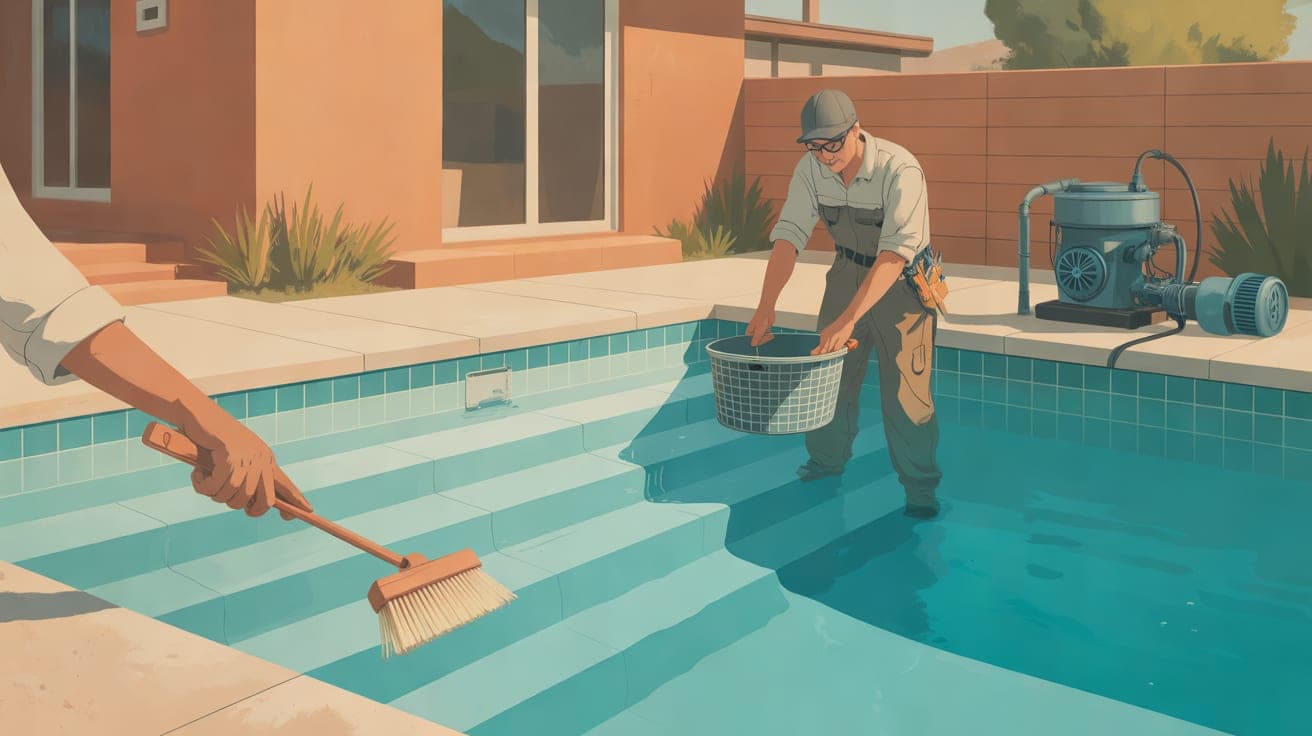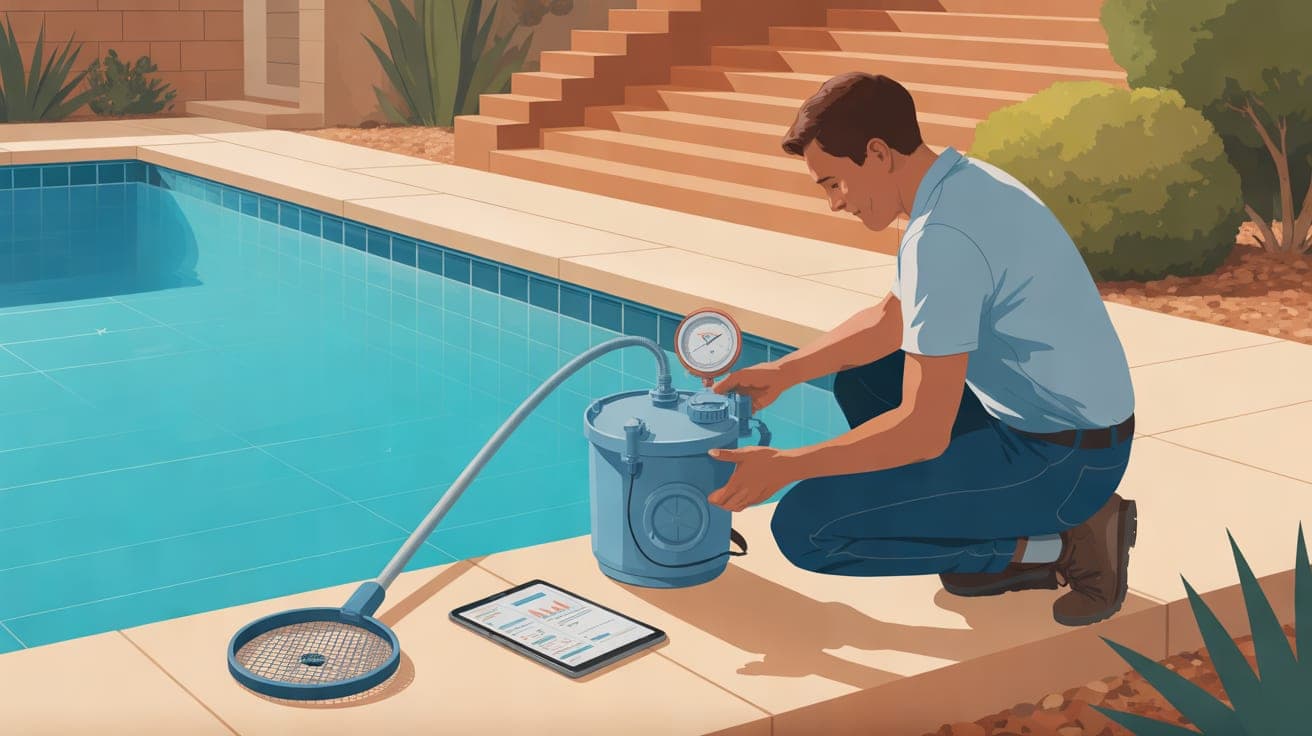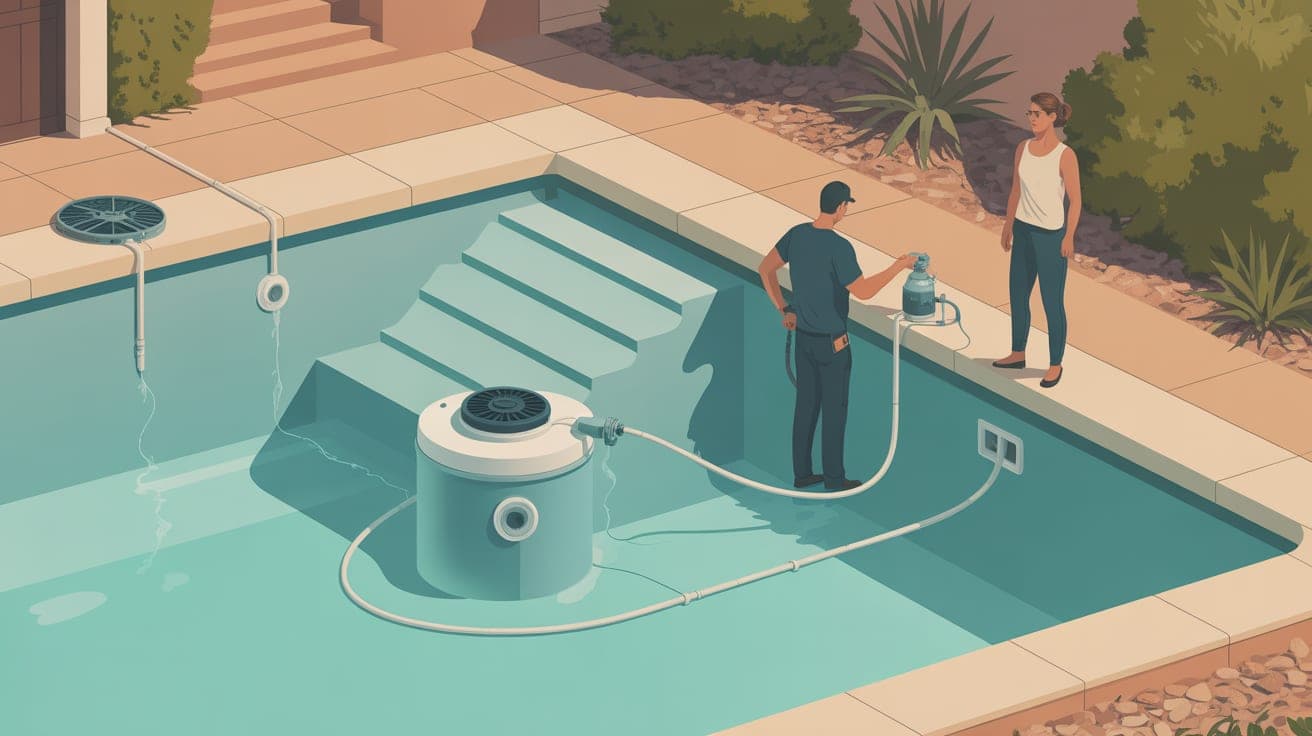
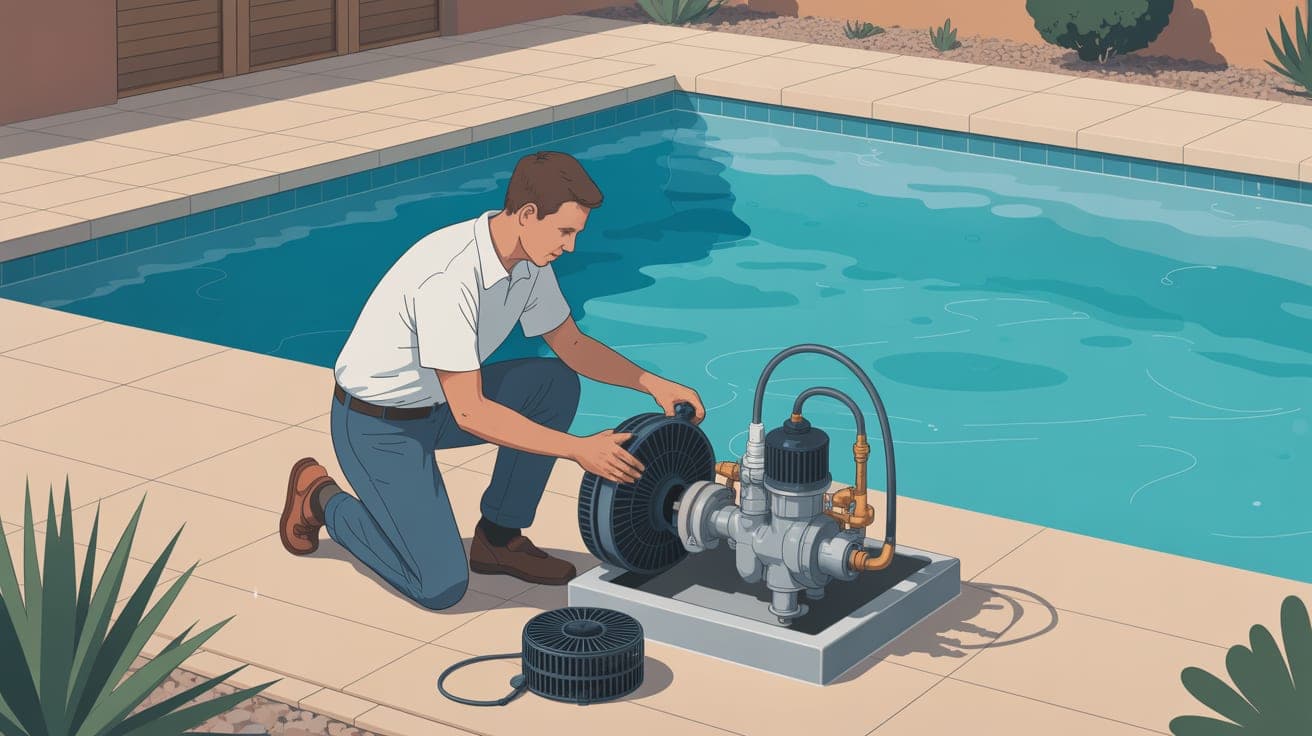
Kenney's Pools provides Mesa pool repair for residential homeowners by testing circulation, electrical, plumbing, and water conditions before recommending replacement. A clear diagnosis separates a repairable part from a failing system, protects your equipment, and gives you a documented path to safe, dependable operation.
Table of contents
- What does pool repair Mesa service include?
- Which pool problems need repair instead of another cleaning?
- How does a technician distinguish a leak from evaporation or a circulation fault?
- Should you repair or replace pool equipment?
- How should you choose a pool repair Mesa company?
- How much should residential pool repair cost in Mesa?
- Do Mesa pool repairs need permits or safety review?
- What should happen during a residential pool repair visit?
- How can you reduce repeat pool equipment problems?
- Frequently asked questions
What does pool repair Mesa service include?
Pool repair Mesa service should identify the failed component or condition, explain its effect on the pool, and provide a repair recommendation before any replacement is approved. Residential pool repair can involve the circulation system, filtration, plumbing, electrical controls, heaters, cleaners, pool lights, valves, and water-related surface concerns.
A pool is a connected operating system. The pump motor turns an impeller, which creates water movement. Water travels through plumbing, passes through the filter, returns through the pool fittings, and carries heat, sanitizer, and debris through that loop. A fault at one point can show up somewhere else. A blocked filter can reduce return flow. An air leak on the suction side can make the pump lose prime. A worn valve seal can send water in the wrong direction. Replacing the most visible part without tracing the cause wastes money and may leave the original problem in place.
Diagnosis is the structured process of identifying the actual source of a pool problem through inspection, operational testing, and comparison of system behavior. It is not a guess based solely on a symptom. A reliable diagnosis tells you what failed, what is still serviceable, what repair is appropriate, and why replacement may or may not be justified. It also gives a homeowner a clear basis for approving work.
Mesa pools face conditions that make good diagnosis especially valuable. Arizona's extreme heat, intense sunlight, and dry climate contribute to rapid algae growth, high evaporation, calcium buildup from hard water, and added strain on pool equipment, according to Tribal Waters Pool. Those conditions can create similar symptoms for very different reasons. Cloudy water may reflect poor filtration, poor circulation, water balance trouble, or suspended debris. Water loss may be evaporation, a plumbing leak, or a leak at a fitting. The right repair begins by separating those possibilities rather than treating every symptom the same way.
Which pool problems need repair instead of another cleaning?
Pool problems need repair rather than another cleaning when cleaning will not correct the mechanical, plumbing, electrical, or structural cause behind the symptom. Cleaning removes debris and helps maintain water quality. It cannot restore a failed motor, seal a damaged pipe, repair a control fault, or correct a circulation restriction.
Call for professional evaluation when you notice these conditions:
- The pump will not start, shuts down, or sounds abnormal. The issue may involve the motor, electrical supply, control equipment, internal moving parts, or an obstruction affecting water movement.
- The pump basket does not stay full of water. Air entering the suction side of the circulation system can interfere with priming and reduce flow. The source may be at a lid seal, fitting, valve, or plumbing connection.
- Return flow is weak or inconsistent. A dirty filter is one possibility, but restricted plumbing, a worn impeller, incorrect valve position, or air entering the system can also reduce circulation.
- Water collects at equipment or the water level drops beyond what you can explain. A leak is an unintended loss of water from the pool vessel, plumbing, or equipment system. It must be distinguished from normal evaporation before repairs are selected.
- The heater, automation, light, or cleaner stops working correctly. These systems involve components that need targeted troubleshooting rather than a broad replacement recommendation.
- Calcium scale is visible or water remains difficult to manage. Scale can restrict flow paths, affect equipment performance, and make surfaces harder to maintain. Arizona hard-water conditions make early attention worthwhile.
A professional pool drain and clean in Mesa can be appropriate when debris, staining, scale, or neglected water requires a deeper reset. It is not a substitute for repairing equipment that cannot circulate or filter water correctly. Kenney's Pools explains which service solves the root problem so you are not paying for work that only improves the appearance temporarily.
How does a technician distinguish a leak from evaporation or a circulation fault?
A technician distinguishes these issues by observing where water is moving, where air is entering, which equipment condition changes the symptom, and whether the loss appears connected to plumbing, fittings, or the pool itself. The goal is to avoid treating every lower water level as a leak or every low-flow complaint as a filter problem.
Evaporation occurs from the water surface and is influenced by Mesa's dry, hot environment. A plumbing leak can behave differently depending on whether the pump is running, because pressure and suction change throughout the circulation loop. An equipment leak may leave moisture around a pump, filter, valve, heater, or union. A vessel or fitting leak can require a different inspection path altogether.
Circulation diagnosis follows the water path. A technician checks the pump lid and basket area, valve settings, visible fittings, filter condition, pressure behavior, return flow, and the equipment pad for signs that narrow the cause. This matters because a pump can be functioning mechanically while the pool still has poor circulation due to a restriction elsewhere. It also prevents an unnecessary pump replacement when the real problem is a serviceable seal, valve, filter condition, or plumbing connection. The repair recommendation should follow those findings, not simply the most noticeable symptom.
Should you repair or replace pool equipment?
You should repair pool equipment when the failed part is identifiable, the remaining equipment is operating reliably, and the repair addresses the actual cause without creating repeated service problems. Replacement makes more sense when the equipment has multiple failures, cannot operate dependably after repair, has damage that affects safe operation, or no longer offers a sound repair path.
Arizona Pool Service notes that intense UV exposure and high temperatures can shorten the life of pool equipment and surfaces compared with more moderate climates. That does not mean age alone decides the answer. A transparent recommendation weighs the condition of the housing, plumbing connections, electrical components, seals, internal wear, performance history, and availability of an appropriate repair.
| Option | Best fit | What you should ask | Main trade-off |
|---|---|---|---|
| Targeted component repair | One failed part is clearly identified and the equipment otherwise performs reliably | What failed, why it failed, and what condition remains uncorrected? | Lower immediate scope, but it does not solve unrelated wear elsewhere |
| Rebuild or multi-part repair | Several serviceable internal parts need attention while the main equipment body remains sound | Which parts are being renewed, and what existing components remain in service? | Can extend usable operation, but may not be sensible if failures are widespread |
| Full equipment replacement | The unit has substantial damage, repeated faults, unsafe operation, or no dependable repair path | Why is repair not recommended, what installation work is included, and are permits required? | Larger project scope, but avoids investing in equipment that cannot be made dependable |
Do not accept replace it as a complete explanation. Ask for the failed component, the evidence behind the recommendation, the repair alternative if one exists, and the effect of delaying either option. Good service gives you a decision, not pressure.
How should you choose a pool repair Mesa company?
Choose a pool repair Mesa company that diagnoses before selling, explains the scope in plain language, verifies licensing requirements, and provides pricing that clearly separates the work being recommended. You are hiring someone to protect a major residential system, not simply swap parts.
Start with the diagnostic process. Ask whether the technician will inspect the system, test the reported symptom, and explain the cause before recommending equipment. A provider should be able to tell you the difference between a symptom and a failed component. For example, no heat is a symptom; the diagnosis must establish whether the source is circulation, controls, the heater, or another connected condition.
Confirm that the contractor is qualified for the scope of work. The Arizona Registrar of Contractors states that pool service contractors performing repairs exceeding $1,000 in labor and materials or installing equipment must hold a valid contractor's license. PoolDial Resources reports that the Arizona Registrar of Contractors typically issues R-6 or CR-6 classifications for pool service and repair work, and those classifications require a business management test, a trade exam, and at least two years of hands-on experience. Confirm licensing requirements for the specific work being proposed before authorizing the project.
Ask for a clear scope before authorization. It should identify the observed problem, recommended work, materials or equipment involved, and any condition that could alter the scope after further inspection. Transparent pricing is not merely a total. It is an explanation of what the total covers and why the work is necessary.
If you need a residential repair assessment in Mesa or nearby East Valley communities, use the Kenney's Pools repair contact page to describe the symptom and request service. Clear information at the start helps the visit focus on the right system and the right diagnostic path.
How much should residential pool repair cost in Mesa?
Residential pool repair cost in Mesa should be based on the diagnosed fault, the required parts and labor, equipment access, and whether electrical, plumbing, or permit work is involved. A responsible provider should not present a universal price for a problem that has not been diagnosed.
The useful question is not simply what does pool repair cost. Ask what is included in the recommendation. Find out whether the price covers diagnostic work, repair labor, parts, installation, follow-up testing, and any required permit coordination. Ask whether there are related conditions that could affect the outcome, such as damaged connections, restricted circulation, or equipment deterioration discovered during the repair.
A cheaper proposal is not automatically the better proposal. Compare whether each provider identified the same failure, is repairing the same components, and is including the same level of testing and installation work. The best value is a repair that corrects the source of the problem and gives you a clear record of what was done.
Do Mesa pool repairs need permits or safety review?
Mesa pool repairs may require permits when equipment replacement involves electrical or plumbing systems, while routine maintenance such as water chemistry adjustment or filter cleaning does not require a permit. The City of Mesa identifies permits for new pool construction, structural modifications, and equipment replacements involving electrical or plumbing systems. Confirm the requirements for the specific repair scope before work begins.
The City of Mesa also states that it follows the 2024 International Swimming Pool and Spa Code, the 2024 International Residential Code, and the 2023 National Electrical Code, including local amendments, for residential pool and spa construction and repair. Permit questions are not paperwork trivia. They can affect how electrical connections, plumbing changes, and equipment installations must be handled.
Safety deserves the same attention as equipment. Jackson White Law states that Arizona law requires residential pools to have a restrictive barrier at least five feet tall, positioned at least 20 inches from the water's edge, without openings larger than four inches. If repair work affects access, barriers, gates, or the pool area, raise the concern before work begins rather than after the system is back in operation.
What should happen during a residential pool repair visit?
A residential pool repair visit should begin with your reported symptom, proceed through focused inspection and testing, and end with a clear explanation of the recommended repair or replacement path. You should understand what the technician found before approving major work.
Be ready to describe what changed: whether the problem is constant or intermittent, what equipment was running when it appeared, whether water loss is visible, and whether recent cleaning or water treatment changed the condition. Those details help narrow the diagnostic path, but they do not replace testing.
The technician should inspect the relevant equipment and water movement, then explain the finding in direct terms. If a repair is approved, the work should be followed by operational testing. You should know what was repaired, what was checked, and what signs would justify a follow-up call. That is the standard Kenney's Pools brings to dependable residential pool service in Mesa.
How can you reduce repeat pool equipment problems?
You can reduce repeat pool equipment problems by addressing restricted flow, air leaks, scale, water conditions, and small drips before they place additional strain on connected components. Preventive service works because pool equipment does not operate in isolation.
A filter that is not maintained can restrict the circulation loop. Scale can accumulate where water passes through equipment and fittings. A small suction-side air leak can reduce pump performance long before the system stops entirely. Routine observation of return flow, equipment-pad moisture, unusual sounds, and water appearance gives you useful warning signs. Addressing those warning signs early can help keep a small condition from affecting connected equipment.
Regular service also gives a technician an opportunity to see gradual changes before they become disruptive failures. Learn more about the Kenney's Pools approach to drain and clean pool care in Mesa when a pool needs more than ordinary weekly attention.
For a clear repair recommendation based on your pool's actual condition, contact Kenney's Pools Service and Repair. Describe the equipment symptom, water concern, or suspected leak, and request a residential diagnostic visit before approving replacement. Kenneyspoolsserviceandrepair LLC — 616 S 97th Pl, Mesa, AZ 85208 — (480) 360-7149.
Frequently asked questions
How do I know whether my Mesa pool needs repair or cleaning?
A Mesa pool needs repair when a mechanical, plumbing, electrical, or circulation fault is causing the problem, while cleaning is appropriate for debris, ordinary maintenance, or water-care needs that do not involve failed equipment.
Can a pool pump problem be caused by something other than the pump?
A pool pump symptom can be caused by a restricted filter, an air leak, valve position, plumbing restriction, electrical issue, or another condition affecting the circulation system, so diagnosis should precede pump replacement.
Do pool equipment replacements require a permit in Mesa?
Pool equipment replacements involving electrical or plumbing systems may require a permit in Mesa, according to the City of Mesa, while routine maintenance such as filter cleaning and water chemistry adjustment does not require one.
What should a pool repair estimate include?
A pool repair estimate should identify the diagnosed problem, recommended repair, included labor and materials, relevant installation work, and any condition that could change the scope after further inspection.
When should I call for a suspected pool leak?
You should call for a suspected pool leak when water loss cannot be reasonably explained, moisture appears around equipment, the pump loses prime, or the issue changes when the circulation system runs.
What license should I ask about for Arizona pool repair work?
For Arizona pool repair work that meets the licensing threshold or includes equipment installation, ask the contractor to verify a valid Arizona Registrar of Contractors license; PoolDial Resources reports that R-6 or CR-6 classifications are typically used for pool service and repair work.
- pool repair
- mesa pools
- pool maintenance
- equipment repair
- residential pools

Kenneyspoolsserviceandrepair
Licensed Pool Service Professionals · Mesa, AZ
Kenney's Pools Service and Repair has spent over a decade keeping residential pools across Mesa and the East Valley clean, balanced and running right. Locally owned, licensed, and focused exclusively on homeowners.