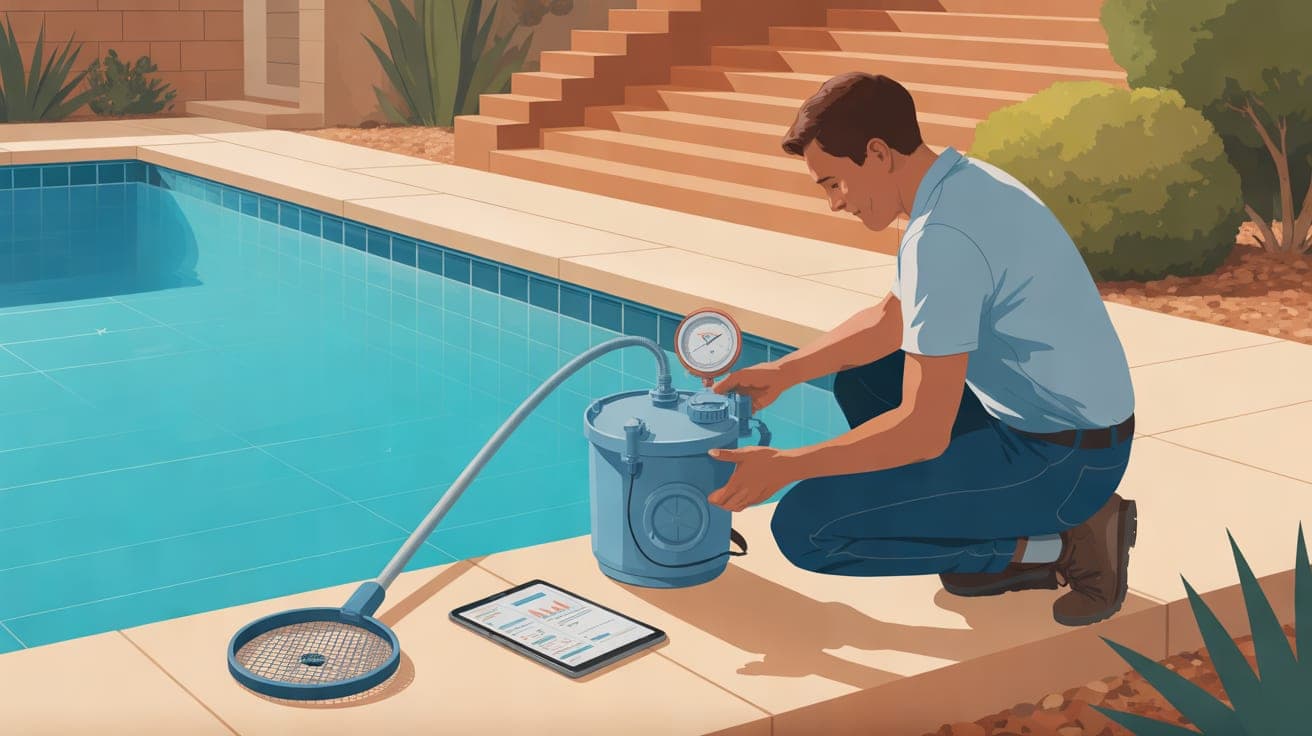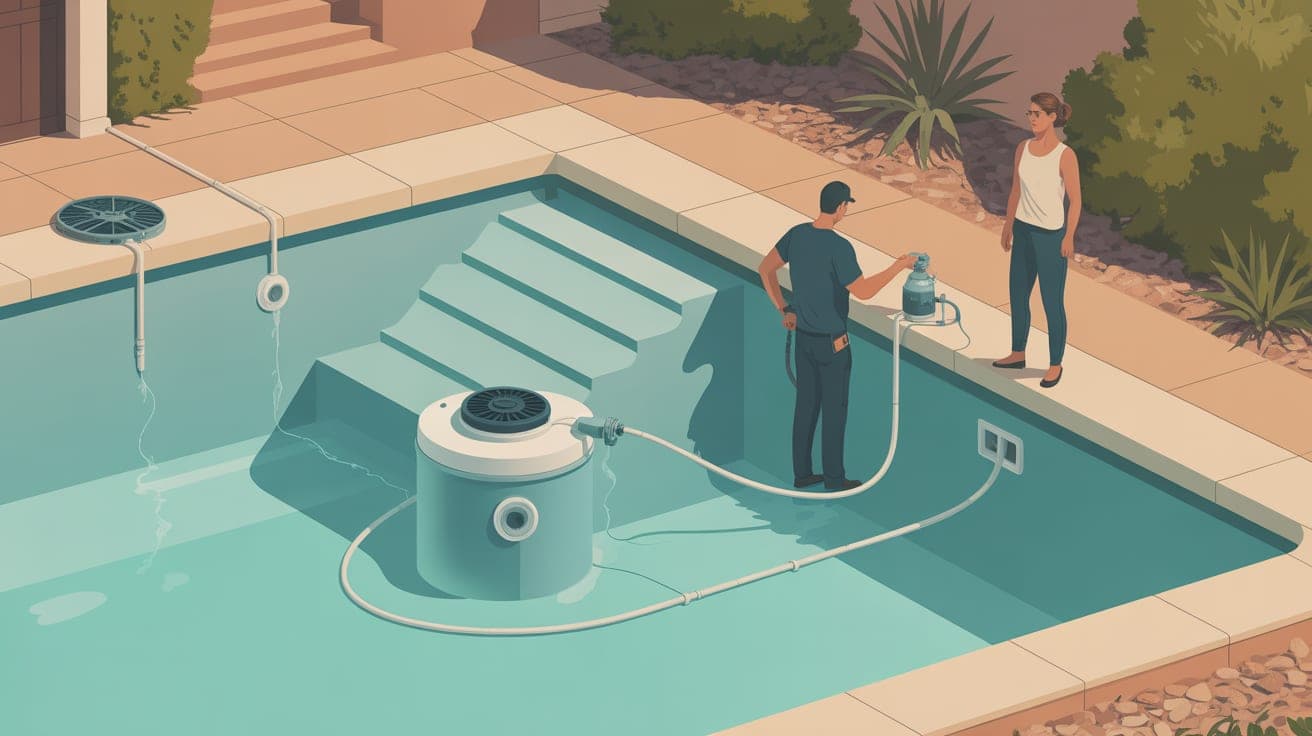

To choose a reliable pool service near me in Mesa, compare the company’s residential service scope, technician communication, diagnostic process, written pricing, and East Valley route coverage—not its distance alone. Kenney's Pools gives homeowners a dependable standard: explain the condition, identify the cause, recommend the right repair or maintenance, and document the work.
Table of contents
- What does a pool service near me include for Mesa homeowners?
- How do I choose a pool service near me in Mesa?
- Which type of pool service is right for my pool?
- Why does diagnosis before replacement protect my pool budget?
- How should pool service pricing be explained?
- Does East Valley coverage matter more than the closest pool company?
- Frequently asked questions
What does a pool service near me include for Mesa homeowners?
A qualified pool service near me should provide a clearly defined combination of cleaning, water balancing, routine equipment checks, and repair capability for your residential pool. The exact work matters more than a broad promise to “maintain” the pool.
Pool cleaning is the physical removal of debris and visible contaminants from the water and pool surfaces. A regular visit may include skimming, emptying baskets, vacuuming, brushing walls and steps, and checking the waterline. Brushing is not cosmetic. It disrupts algae before it establishes a protective layer on plaster, tile, or pebble surfaces.
Water balancing means adjusting the chemical conditions that control sanitation, comfort, and equipment protection. Sanitizer controls algae and bacteria. pH affects sanitizer performance and swimmer comfort. Total alkalinity helps resist rapid pH movement. Calcium hardness matters because water that is too aggressive can draw minerals from certain finishes, while excessive calcium can contribute to scale. A service company should test, explain meaningful readings, and dose chemicals with the pool’s volume and current condition in mind.
Maintenance includes recurring inspections that catch developing problems:
- a low water level,
- a clogged skimmer basket,
- weak return flow,
- air in the pump basket,
- unusual filter pressure, or
- a timer that no longer matches the season.
Repair begins when a component has failed or no longer operates correctly. A reliable provider separates these categories so you know what is included in routine care and what requires separate authorization.
For ongoing care in the East Valley, review the scope of residential swimming pool cleaning service in Queen Creek before comparing quotes. The useful question is not simply whether a company visits weekly. Ask what the technician actually performs, checks, records, and communicates during that visit.
How do I choose a pool service near me in Mesa?
Choose a pool service near me in Mesa by asking direct questions about included work, service records, equipment expertise, approval procedures, pricing, and your address’s place on the company’s East Valley route.
Use these seven questions before you commit:
-
What is included on every scheduled visit? Ask for a task list, not a general description. Confirm whether the plan includes chemical testing and balancing, brushing, basket emptying, vacuuming, filter-pressure review, and equipment observation. Also ask which tasks occur only as needed or at an added charge.
-
How will I know the work was completed? Dependable pool care should leave a clear record. That may be a service note, a summary of tested conditions, photos when useful, and an explanation of anything that needs attention. Communication is how you avoid discovering a low water level or equipment issue after it becomes a larger problem.
-
Who handles repairs, and how are they diagnosed? Some companies focus only on cleaning and refer every equipment issue elsewhere. That arrangement can work, but you need to know it in advance. A provider with repair capability can connect a recurring service observation—such as weak circulation—to a tested cause and a specific repair recommendation.
-
Do you diagnose before recommending replacement? Ask what tests the technician will perform. For example, a pump that will not prime may have a suction-side air leak, a worn lid O-ring, a blocked impeller, a low water level, or a failed seal. Replacing the pump without checking those conditions can waste money and leave the original problem in place.
-
What requires my approval? Routine chemicals under your plan and a new motor are not the same type of expense. Confirm that non-routine repairs, replacement parts, or special cleaning work are explained and approved before work begins, except in an emergency you have specifically authorized.
-
How is pricing presented? You should be able to distinguish recurring service from one-time repairs, parts, labor, chemicals outside the plan, and major corrective work. Transparent pricing makes comparison possible. A vague low monthly figure does not tell you what happens when the filter needs attention or the pool turns green.
-
Do you regularly serve my neighborhood? Mesa, Chandler, Gilbert, Tempe, Queen Creek, and Apache Junction have different route patterns even though they are all nearby. A company that already services your area is better positioned to provide consistent visit timing and practical follow-up. Proximity helps, but reliable coverage and communication matter more than a map pin.
Which type of pool service is right for my pool?
The right pool service matches the current condition of your water and equipment, rather than forcing every pool into the same weekly package. Use the comparison below to decide what you need now.
| Service approach | Best fit | What the technician should do | What you should clarify before agreeing |
|---|---|---|---|
| Weekly cleaning and balancing | A pool that is operating normally and needs consistent care | Remove debris, brush surfaces, test and adjust water, inspect baskets and circulation | Exact tasks, chemical policy, service notes, and whether filter cleaning is included |
| Maintenance-focused service | A stable pool where you want proactive equipment oversight | Perform routine cleaning plus monitor flow, pressure, valves, timer settings, leaks, and equipment condition | How often equipment is inspected and how developing repair needs are reported |
| One-time repair visit | A pump, filter, cleaner, heater, valve, automation control, or plumbing issue | Isolate the fault, test related components, explain repair options, and obtain approval | Diagnostic charge, repair estimate, parts used, and whether the repair addresses the root cause |
| Corrective cleanup or recovery | Green water, heavy debris, algae growth, or water that has been neglected | Identify why sanitation or circulation failed, remove debris, restore filtration, and rebalance water in stages | Whether the cause is chemical, filtration, circulation, or a combination—and what ongoing care will prevent recurrence |
| Equipment replacement or upgrade | A confirmed failed component or an efficiency, reliability, or compatibility need | Verify specifications, plumbing connections, electrical requirements, and proper setup after installation | Why replacement is necessary, the selected equipment’s fit, and any work outside the equipment itself |
A weekly visit does not eliminate the need for repairs. Cleaning protects water quality; it does not repair a leaking shaft seal, a cracked valve, a blocked impeller, or a failing electrical component. On the other hand, a repair-only company may restore a pump but not provide the recurring brushing and chemistry control that keep the water clean. Choose the company and plan that cover your actual needs.

Why does diagnosis before replacement protect my pool budget?
Diagnosis before replacement protects your budget because several different failures can produce the same pool symptom. A technician should test the system in a logical order before declaring an expensive part bad.
Consider low return flow. The visible symptom is weak water movement at the return fittings, but the cause could be a full skimmer basket, a dirty filter, a valve left partly closed, a clogged pump impeller, an air leak on the suction side, or a pump problem. Each cause has a different repair. Filter pressure is a useful clue, but it is not a complete diagnosis by itself: high pressure can point toward restriction after the pump, while low pressure with air in the pump basket may suggest the pump is drawing air before water reaches it.
The same principle applies to leaks. Water loss can result from evaporation, splashing, a plumbing leak, a failed fitting, a leaking pump seal, or an issue around the structure. A responsible technician identifies where and under what operating condition the loss occurs before proposing a repair. Replacing equipment based only on a symptom is not careful service.
Ask for a plain-language explanation of three points:
- what was observed,
- what was tested, and
- why the recommended repair solves the identified fault.
If a pump is recommended, you should understand whether the motor, seal, housing, plumbing connection, electrical supply, or the entire pump assembly is the issue. For planned replacements, review the details of pool pump installation and repair support so you can ask better questions about fit and installation scope.
How should pool service pricing be explained?
Pool service pricing should separate recurring care from diagnostic visits, repairs, replacement parts, and corrective work so you can approve costs with confidence. The lowest quoted plan is not the best value if it excludes the work your pool regularly needs.
A clear quote identifies the service frequency, routine tasks, chemical expectations, and exclusions. For repair work, it should distinguish the diagnostic visit from the repair itself whenever possible. A diagnostic visit pays for the technician’s process of locating the fault; a repair quote addresses the approved labor and parts required to correct it. Those are different services, and combining them without explanation makes pricing hard to evaluate.
Be cautious with an estimate that names a part but not the problem. “New pump needed” does not answer whether the existing pump is leaking, electrically failed, improperly sized, or simply unable to prime because of an upstream issue. Likewise, a low monthly service price may not include filter cleanings, heavy debris removal, algae recovery, or extra chemical demands after a storm or equipment failure. Ask for the boundary between normal weekly care and special work.
For a local perspective on the factors behind recurring care, read the guide to weekly pool service costs in Mesa. It will help you compare scope and accountability instead of comparing one monthly number alone.
Does East Valley coverage matter more than the closest pool company?
East Valley coverage matters because a company’s established service route, response process, and repair capacity determine reliability after you become a customer. The closest company is only a strong choice if it can consistently serve your address and communicate when conditions change.
A pool issue rarely waits for a convenient time. A pump may lose prime between visits. A wind event may overload baskets. A failed timer can leave the water without proper circulation. Ask how the company handles reported issues between scheduled service visits, how it communicates an arrival window or update, and whether repair work is handled by the same team.
Local experience also matters because desert pools face intense sun, blowing dust, heat-driven water loss, and heavy seasonal debris. These conditions affect sanitizer demand, basket loading, filter performance, and water level. Good service responds to the pool in front of the technician, not a generic checklist alone.
Homeowners needing equipment troubleshooting in the area can review pool repair service in Tempe to see the type of repair concerns that deserve a prompt, methodical response. Your provider should give you a defined path from observation to diagnosis to approved repair.
If you want residential pool care that is clear, dependable, and based on the actual condition of your pool, contact kenneyspoolsserviceandrepair.com — Kenneyspoolsserviceandrepair LLC — 616 S 97th Pl, Mesa, AZ 85208 — (480) 360-7149 to discuss your Mesa or East Valley service needs.
Frequently asked questions
How often should a residential pool be serviced in Mesa?
Most residential pools benefit from weekly service because debris, sanitizer demand, and water balance can change quickly in Mesa heat and wind. The right schedule also depends on pool use, surrounding trees, equipment condition, and whether you handle any tasks between visits.
What should I ask before hiring a pool service near me?
Ask what each visit includes, how water testing is handled, how service is documented, what work requires approval, how repairs are diagnosed, and whether the company routinely serves your Mesa or East Valley neighborhood.
Does weekly pool service include equipment repairs?
Weekly pool service usually includes observation of visible equipment conditions, but repairs and replacement parts are normally separate work. Confirm whether your plan includes only routine checks or also covers diagnostic visits, labor, and parts.
Why is my pool water green even though the pump is running?
Green pool water usually means algae is growing because sanitation, circulation, filtration, or water balance is inadequate. A running pump does not prove the system is filtering effectively; low flow, a dirty filter, incorrect chemistry, or insufficient sanitizer can still allow algae to grow.
Should a pool company replace a pump without testing it first?
A pool company should test the pump and related circulation conditions before recommending replacement because air leaks, clogged impellers, blocked filters, electrical problems, and valve settings can mimic pump failure. A documented diagnosis helps ensure you pay for the correct repair.
- pool service
- mesa pool service
- pool maintenance
- pool repair
- east valley pools

Kenneyspoolsserviceandrepair
Licensed Pool Service Professionals · Mesa, AZ
Kenney's Pools Service and Repair has spent over a decade keeping residential pools across Mesa and the East Valley clean, balanced and running right. Locally owned, licensed, and focused exclusively on homeowners.