Kenney’s Pools uses the Langelier Saturation Index (LSI) to show whether your Mesa-area pool water is likely to dissolve calcium from plaster, deposit scale, or remain in balance. Keeping LSI near neutral helps protect interior surfaces, heaters, pumps, filters, and salt-cell equipment while supporting clear, comfortable residential pool water.
Table of contents
- What is the Langelier Saturation Index for a pool?
- How is the Langelier Saturation Index calculated?
- Which pool-water readings matter before you adjust LSI?
- What LSI readings mean balanced, scaling, or corrosive pool water?
- How should you correct an out-of-range Langelier Saturation Index?
- Why does Arizona pool water need closer LSI attention?
- Can LSI replace regular chlorine and filtration care?
- Frequently asked questions
What is the Langelier Saturation Index for a pool?
The Langelier Saturation Index is a calculated measure of whether pool water is undersaturated, balanced, or oversaturated with calcium carbonate.
Calcium carbonate is the mineral component found in plaster, grout, stone, and common scale deposits. LSI does not measure one chemical by itself. It combines pH, calcium hardness, total alkalinity, water temperature, and total dissolved solids (TDS) to predict the water’s calcium-carbonate behavior.
Water with a negative LSI is undersaturated. It has a tendency to seek dissolved calcium carbonate, which can contribute to etching, rough plaster, faded aggregate, weakened grout, and wear on susceptible metal components. Water with a positive LSI is oversaturated. It has a tendency to release calcium carbonate as scale on tile, heaters, salt cells, filter elements, and spillways.
For a long-lasting Arizona pool, the practical target is usually close to zero, commonly within about -0.30 to +0.30. The best operating point depends on the pool finish, equipment, water temperature, and current condition. A slight positive reading may be safer for a new or vulnerable plaster surface, while a persistent high positive reading creates expensive scale problems.
LSI is often called a water-balance metric because it shows how the major balance readings work together. A pH that looks acceptable on its own can still be a problem if calcium hardness is low, alkalinity is high, or summer water temperatures are pushing the index upward.
How is the Langelier Saturation Index calculated?
The Langelier Saturation Index is calculated by subtracting the water’s calculated calcium-carbonate saturation pH from its actual measured pH.
The core expression is:
LSI = measured pH - saturation pH (pHs)
A traditional manual saturation-pH calculation is:
pHs = (9.3 + A + B) - (C + D)
Where:
- A accounts for total dissolved solids.
- B accounts for water temperature.
- C accounts for calcium hardness reported as calcium carbonate.
- D accounts for carbonate alkalinity.
Most homeowners should use a reliable pool LSI calculator rather than work from a printed Langelier Saturation Index table. The math uses logarithms, and a calculator reduces transcription mistakes. The calculator is only as accurate as the test results entered into it.
One detail matters: use the alkalinity type required by the calculator. Many pool calculators need carbonate alkalinity, not simply the total alkalinity on a test strip. Cyanuric acid, used to protect chlorine from sunlight, contributes to a total-alkalinity result but does not provide the same carbonate buffering for LSI. Borate treatments can also affect the correction. Entering uncorrected total alkalinity can make the water appear more scale-forming than it really is.
A basic Langelier Saturation Index spreadsheet can be useful for tracking trends, but it must account for temperature changes and use consistent units. A free calculator or app is not a substitute for complete, accurate water testing.
Which pool-water readings matter before you adjust LSI?
Accurate pH, calcium hardness, total alkalinity, temperature, TDS, and stabilizer readings matter before any LSI adjustment.
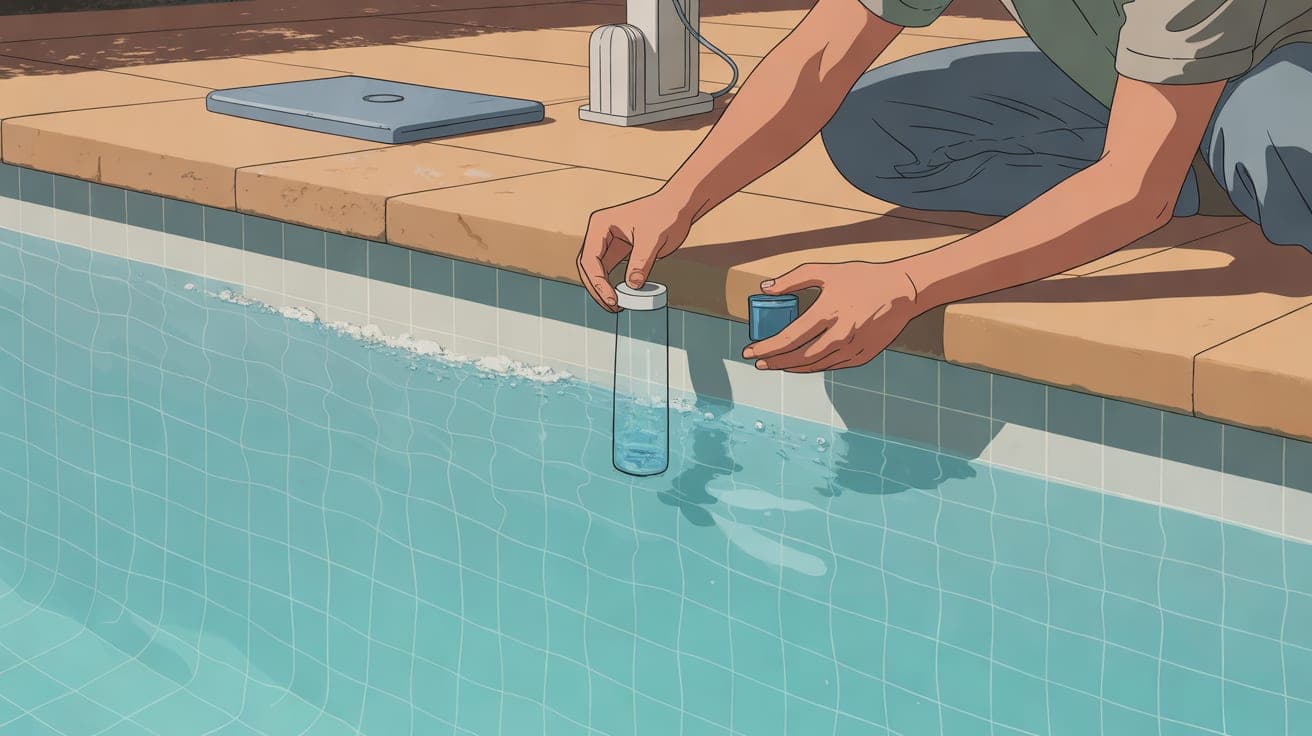
Test these values together, preferably from a water sample taken away from returns and after the circulation system has run long enough to mix the pool. Do not calculate LSI from a single old test result while adjusting chemistry based on a newer one.
| Reading | What it controls | Why it matters in Arizona | Adjustment decision criterion |
|---|---|---|---|
| pH | The strongest short-term LSI influence | Aeration, waterfalls, and hot conditions can drive pH upward | Correct a pH outside its appropriate operating range before making large hardness changes |
| Calcium hardness | Available calcium in the water | Low hardness can leave plaster water-hungry; high hardness raises scaling risk | Raise gradually when genuinely low; use dilution planning when persistently excessive |
| Total and carbonate alkalinity | pH buffering and carbonate availability | High alkalinity can make pH climb and keep LSI elevated | Avoid lowering alkalinity aggressively unless repeated testing supports it |
| Water temperature | Calcium-carbonate solubility | Summer heat makes the same chemistry more scale-forming | Recheck LSI as seasonal water temperatures change |
| TDS or salt level | Ionic strength used in the calculation | Evaporation concentrates dissolved material between water additions | Track it over time; do not assume a single TDS number explains every problem |
| Cyanuric acid | Alkalinity correction and chlorine protection | High stabilizer can distort LSI inputs and weaken chlorine performance | Use corrected carbonate alkalinity and address excessive stabilizer separately |
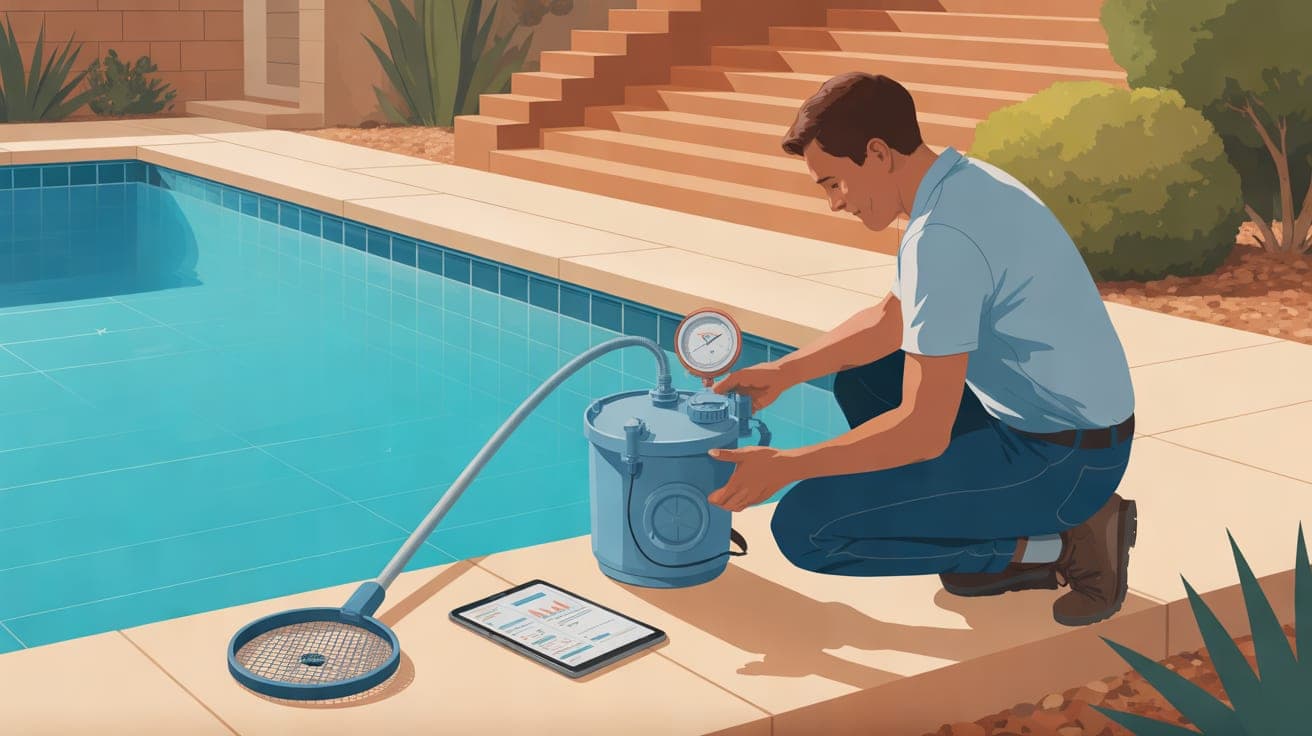
Test strips are useful for a quick check, but a drop-based kit or professional water analysis gives more dependable inputs for an LSI decision. A pool can have clear water and still be out of balance. Clear water describes appearance; LSI describes the water’s mineral tendency.
What LSI readings mean balanced, scaling, or corrosive pool water?
An LSI near zero is balanced, a sustained reading above roughly +0.30 is scale-forming, and a sustained reading below roughly -0.30 is calcium-carbonate aggressive.
| LSI range | Water tendency | What you may see | Practical response |
|---|---|---|---|
| Below -0.30 | Undersaturated or aggressive | Etching, roughness, dull plaster, grout deterioration, or recurring demand for balance chemicals | Verify the tests, then correct the cause gradually; do not try to solve it with pH alone |
| -0.30 to +0.30 | Generally balanced | Stable surfaces and less mineral stress on equipment | Maintain routine testing and account for seasonal temperature changes |
| Above +0.30 | Oversaturated or scale-forming | White deposits, rough tile line, restricted heater flow, scale on cells or fixtures | Lower the drivers in a controlled order and avoid allowing pH to remain high |
“Corrosive” in LSI discussions means the water is undersaturated with calcium carbonate. It does not guarantee that every metal part will corrode, nor does a neutral LSI eliminate every possible equipment issue. Chloride exposure, poor bonding, electrical faults, and water chemistry outside the LSI formula can affect equipment separately. LSI is powerful because it identifies the mineral balance issue clearly, not because it replaces all pool care.
The same logic applies to a water feature. Waterfalls and spillways increase aeration, which releases dissolved carbon dioxide and tends to raise pH. As pH rises, LSI rises. A pool that tests balanced in the morning can develop visible scale around a waterfall if pH is repeatedly allowed to climb.
How should you correct an out-of-range Langelier Saturation Index?
Correct an out-of-range Langelier Saturation Index by identifying the readings driving it, then making the smallest effective adjustment and retesting before the next change.
Do not chase a target number with several chemicals at once. Pool chemistry is connected. Lowering pH can lower LSI promptly, but repeated acid additions also reduce alkalinity. Raising calcium hardness can protect a low-LSI plaster pool, but adding calcium to a high-pH, high-alkalinity pool may cause clouding or scale. The right remedy depends on the full water profile.
Use this order of decision-making:
- Confirm the inputs. Retest pH, calcium hardness, alkalinity, temperature, TDS, and cyanuric acid. Check whether the calculator requires corrected carbonate alkalinity.
- Address pH first when it is clearly high or low. pH moves LSI quickly and is often the least disruptive first correction.
- Review alkalinity as a pH-control issue. High alkalinity can keep pushing pH up. Low alkalinity can allow unstable pH swings. Adjust it in measured stages.
- Set calcium hardness for the surface and water source. Do not leave plaster exposed to chronically low-calcium water. Do not add hardness blindly to water already prone to scale.
- Plan dilution or partial draining for excessive dissolved material. Evaporation removes water but leaves minerals behind. Refill water can improve or worsen the situation depending on its chemistry, so test it before relying on dilution as a cure.
- Recalculate after the water circulates. A chemical adjustment needs time to distribute. Retest rather than assuming the calculated result occurred exactly as expected.
An acid wash is not a routine answer to high LSI. It removes a thin layer of surface material along with visible staining or scale, so it should be selected only after the underlying balance problem is corrected. If surface scale or staining needs evaluation, Kenney’s Pools can help determine whether a professional pool acid wash is appropriate.
Why does Arizona pool water need closer LSI attention?
Arizona heat and evaporation concentrate minerals, while warm water and frequent aeration can increase a pool’s scaling tendency.
In Mesa and the East Valley, regular water replacement from evaporation does not remove calcium, salt, stabilizer, or other dissolved material. It leaves them in the remaining water. Refill water then adds another mineral load. Over time, calcium hardness and TDS can rise even if the pool has been routinely cleaned.
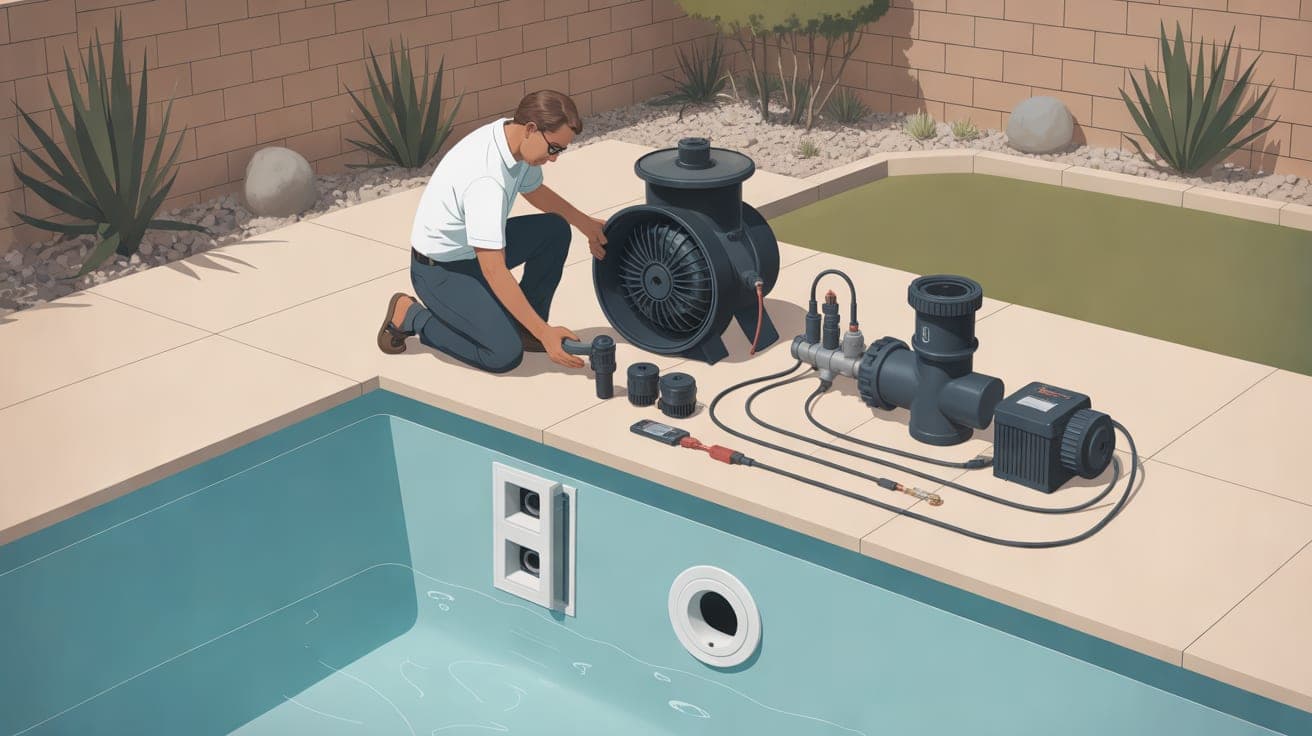
Heat matters because warmer water holds calcium carbonate differently than cooler water. A chemistry profile that is manageable in winter can move into scale-forming territory in summer without any chemical added. Salt pools require particular attention because scale can form on the chlorine-producing cell, reducing performance and creating a cleaning burden. Heaters, cartridges, and plumbing also suffer when scale narrows water passages or coats heat-transfer surfaces.
Routine service catches these changes before they become a surface or equipment repair. Our residential pool maintenance service includes the practical checks that help keep water chemistry from becoming a costly repair issue. For recurring balance problems, targeted pool chemical balancing is safer than making large, unverified adjustments on your own.
Can LSI replace regular chlorine and filtration care?
LSI cannot replace sanitation, circulation, filtration, or cleaning because it measures mineral balance rather than whether the water is clean or safe.
- Chlorine or another approved sanitizer controls microorganisms.
- Filtration removes suspended debris.
- Brushing removes developing biofilm and scale from surfaces.
- LSI helps protect the physical pool and equipment from calcium-related damage.
Each job is necessary.
Do not add chlorine, shock, algaecide, or clarifier simply to change an LSI reading. Those products address different conditions, although repeated additions can contribute to TDS over time. Likewise, do not diagnose a heater, pump, or filter problem from LSI alone. Scale may be part of the cause, but equipment needs a direct inspection. Homeowners who notice reduced flow, leaking equipment, or persistent heater issues can schedule pool repair service in Mesa for a clear assessment.
For dependable residential pool care in Mesa and the East Valley, contact Kenney's Pools Service and Repair LLC directly to schedule water-balance testing, maintenance, or an equipment evaluation — 616 S 97th Pl, Mesa, AZ 85208 — (480) 360-7149.
Frequently asked questions
What does saturation index mean in pool water?
Saturation index means a calculated estimate of whether pool water will tend to dissolve calcium carbonate, remain stable, or deposit calcium carbonate as scale. A near-zero result indicates balanced mineral conditions, while negative values are more aggressive and positive values are more scale-forming.
What are LSI and RSI?
LSI is the Langelier Saturation Index, which estimates calcium-carbonate balance using pH, calcium hardness, alkalinity, temperature, and dissolved solids. RSI is the Ryznar Stability Index, a related scale derived from saturation pH that expresses scaling or corrosive tendency differently; pool service commonly relies on LSI because it is direct and practical for water adjustment decisions.
How do you calculate LSI in a pool?
Calculate pool LSI by testing pH, calcium hardness, carbonate alkalinity, water temperature, and total dissolved solids, then entering those readings into a pool saturation calculator or applying the LSI formula of measured pH minus calculated saturation pH. Use corrected carbonate alkalinity when cyanuric acid or borates affect the test result.
How do you calculate water saturation?
Calculate water saturation by determining the saturation pH from temperature, dissolved solids, calcium hardness, and carbonate alkalinity, then comparing it with the actual pH. Actual pH above saturation pH produces a positive, scale-forming LSI; actual pH below saturation pH produces a negative, calcium-carbonate-aggressive LSI.
What LSI reading should a plaster pool have?
A plaster pool should generally operate close to an LSI of zero, often within approximately -0.30 to +0.30. The appropriate target can lean slightly positive for a new or vulnerable plaster surface, but persistent positive readings should be avoided because they promote scale.
Does high calcium hardness always mean my pool will scale?
High calcium hardness does not automatically cause scale because scaling depends on the combined LSI inputs, especially pH, alkalinity, and temperature. High hardness combined with high pH, elevated alkalinity, and warm water is far more likely to produce calcium deposits.
How often should I check my pool’s LSI?
Check LSI whenever you perform a complete water test, after major water replacement, after substantial chemical corrections, and as water temperatures change seasonally. Weekly chemistry checks with periodic full testing help reveal trends before scale or etching becomes visible.
Can I lower LSI by adding acid every week?
Adding acid can lower pH and temporarily lower LSI, but routine acid addition without addressing high alkalinity, excessive calcium, warm water, or aeration treats the symptom rather than the cause. Repeated acid use can also drive alkalinity too low and create unstable water chemistry.
- langelier saturation index
- pool water chemistry
- mesa pool maintenance
- pool scale

Kenney's Pools
Licensed Pool Service Professionals · Mesa, AZ
Kenney's Pools Service and Repair has spent over a decade keeping residential pools across Mesa and the East Valley clean, balanced and running right. Locally owned, licensed, and focused exclusively on homeowners.